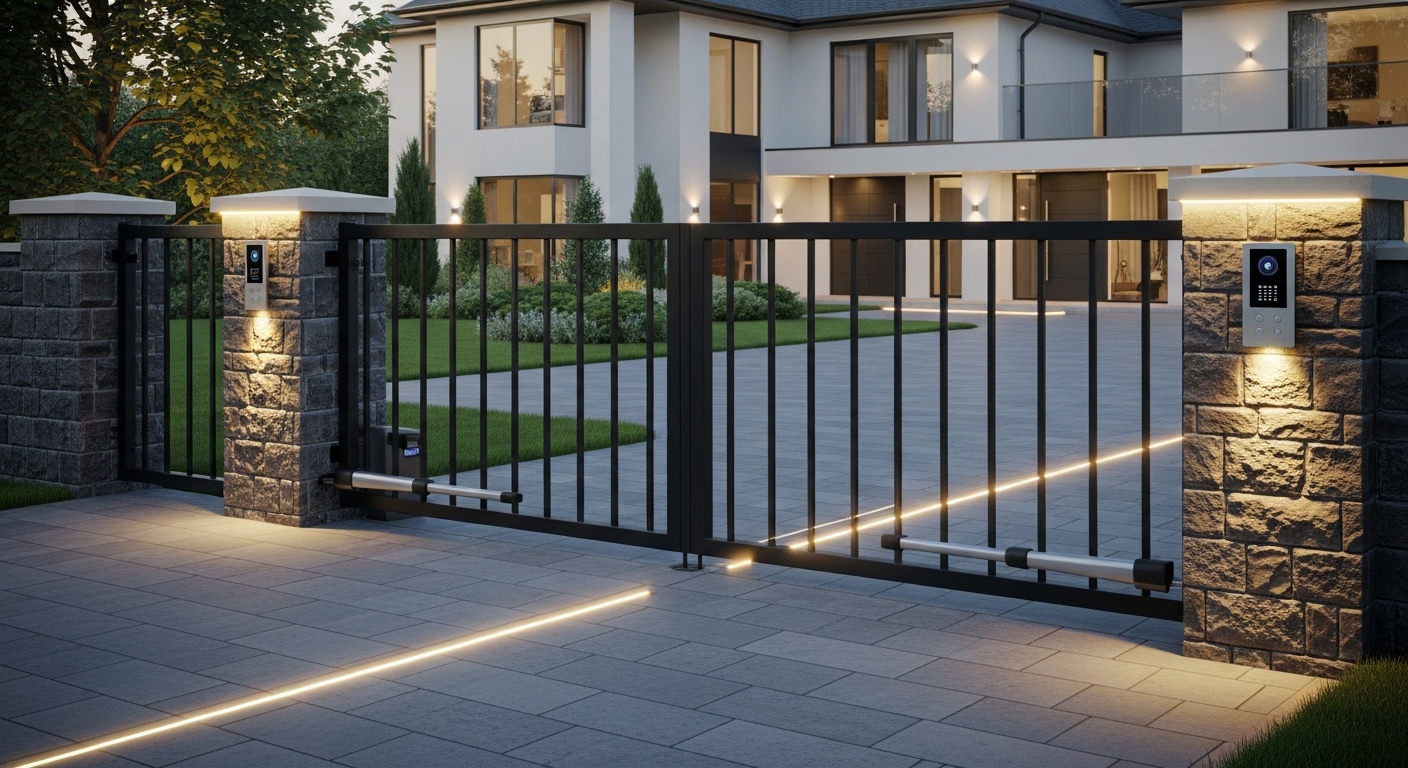
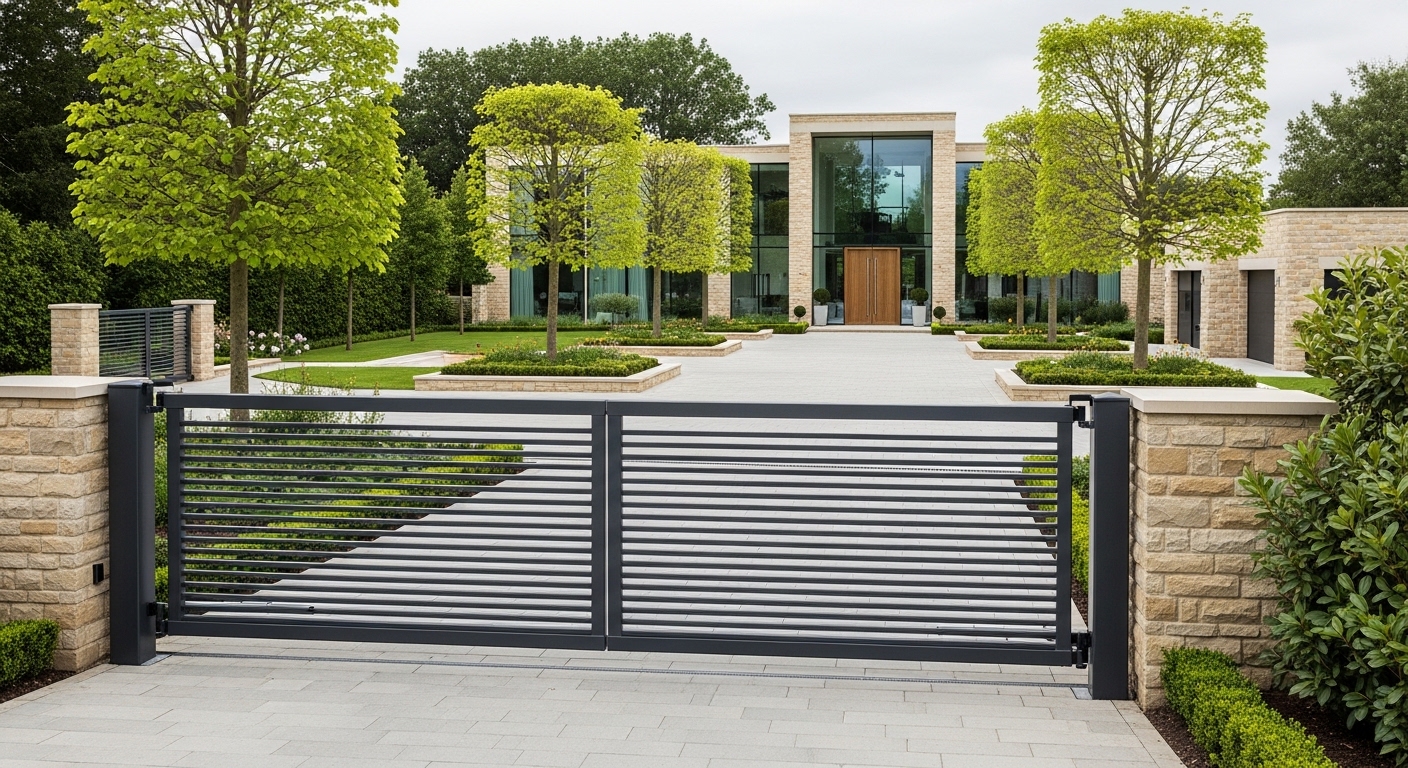
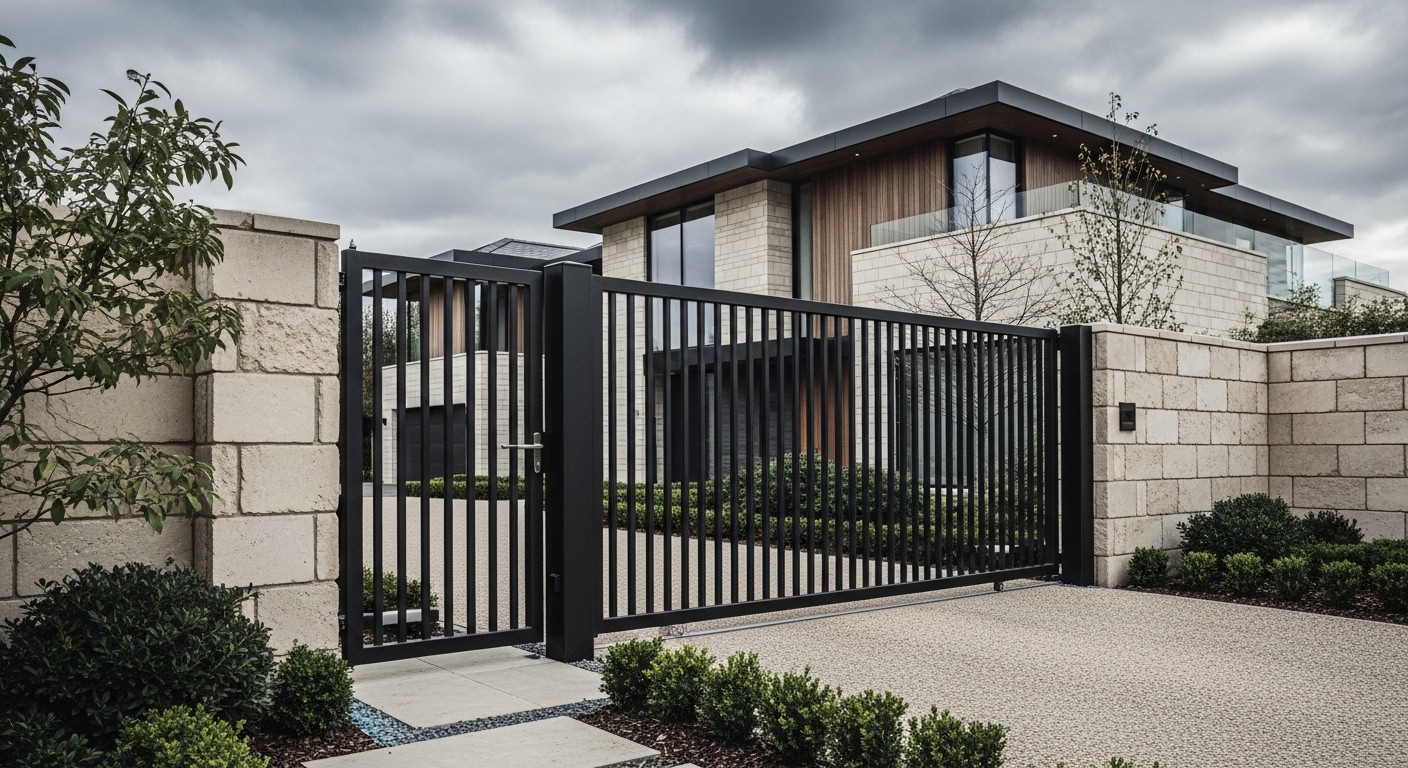
Automated driveway gates are mechanical systems with motors, drive mechanisms, hinges, control electronics, and safety devices that all need periodic attention to continue working safely and reliably. Just as a boiler service or a car service catches small problems before they become expensive failures, annual gate maintenance keeps your system in the condition it was installed in, rather than slowly drifting toward a breakdown.
Most experienced London gate engineers recommend a service once a year for gates with normal household use. Gates used very heavily benefit from servicing twice a year. The cost is modest and the value of catching a worn component before it causes a full failure is considerable.
Mechanical Inspection and Lubrication

The first part of any thorough gate service is a complete mechanical inspection. The engineer examines every hinge, pivot point, and bearing surface for signs of wear, misalignment, or corrosion. Worn hinges that have developed play cause the gate to sag over time, which puts increasing strain on the motor.
All moving parts are cleaned and lubricated using the correct grade of lubricant for the application. The gate structure itself is inspected for deterioration: on metal gates this means looking for paint chips and rust spots; on timber gates it means checking for checking along the grain, swelling at the bottom rail, and the condition of the applied finish.
Free Matching Service
Ready to get driveway gate quotes?
Get matched with vetted London installers — no obligation, no cost.
Motor and Drive Mechanism Checks
The motor is the most expensive individual component in the gate system, and it is the component whose failure causes the most disruption. A thorough service includes running the gate through several complete open-close cycles while listening and feeling for any signs of unusual noise, vibration, or hesitation.
The engineer checks the motor mounting for security, inspects the connection between the motor and the gate for correct alignment, and examines the drive mechanism for wear. Control board connections are inspected for signs of corrosion or loose wiring. Travel limit settings are verified and adjusted if necessary.
Safety System Testing: The Most Important Part

Safety testing is the most important element of any gate service. The engineer carries out a structured series of tests to confirm that every safety device is functioning correctly.
Photocell testing involves introducing an object into the gate path while the gate is closing and confirming that the gate stops and reverses immediately. Safety edges, where fitted, are compressed manually to confirm the gate reverses on contact. Auto-reverse function is checked by applying manual resistance to the gate during travel.
Force Measurement and Legal Compliance
A complete service should include force measurement to verify that the gate operates within the legal limits set by BS EN 12453. The maximum permitted peak force is 400 Newtons, with a maximum sustained force of 150 Newtons over five seconds. Force settings can drift as motors age and mechanical components wear.
Not every gate service company carries out force measurement as standard. When booking a service, ask specifically whether force measurement is included.
Intercom and Access Control Testing
If your gate system includes an intercom, keypad, or proximity reader, these should all be tested as part of the service. The engineer checks camera image quality, microphone and speaker function, call button operation, and gate release from the intercom. Battery backup units, where fitted, are tested under load.
What Does an Annual Service Cost in London?
A standard annual service visit in London typically costs between £150 and £250 for a single or double gate system. Annual maintenance contracts, offered by most established London gate companies, include one or two service visits per year, priority response rates for callouts, and discounted parts pricing. These typically cost £200 to £400 per year.
What Happens Without Regular Servicing?
The consequences of skipping annual servicing are almost always more expensive than the service itself. Unlubricated components wear faster. Misaligned hinges strain the motor. Dirty photocells that fail silently create a safety hazard. Motor failures are the most disruptive consequence and are disproportionately common on unmaintained systems.
Warranty implications are also real. Most motor manufacturers include a condition in their warranty documentation that annual professional servicing must be carried out and recorded. Without service records, a warranty claim for a motor failure may be rejected.
The bottom line is a simple one: a £200 annual service protects a gate system that costs £5,000 to £10,000 to install, keeps it operating safely within legal requirements, and preserves the manufacturer warranty. It takes around an hour and causes no meaningful disruption to your day.