Timber driveway gates remain one of the most popular choices for London homeowners, and it is easy to understand why. Wood offers warmth, character, and design flexibility that no other material fully replicates. But not all timber is equal, and the species you choose will determine how your gate looks, performs, and ages over the next two to three decades.
This guide compares the four timber types most commonly used by UK gate makers: iroko, European oak, western red cedar, and Accoya. Each has genuine strengths and real limitations, and none is the automatic choice for every situation.
Iroko: The Practical All-Rounder
Iroko is the most popular hardwood for driveway gates in the UK. It is a West African hardwood with a naturally high oil content, which gives it excellent resistance to moisture, rot, and insect attack without requiring heavy chemical treatment. It machines cleanly, holds fixings well, and finishes beautifully.
Fresh iroko has a warm golden-brown colour that darkens slightly over time. Left untreated, it weathers gradually to a silver-grey similar to teak. Most people prefer to treat it annually with a quality exterior oil to maintain the golden tone. Iroko gates properly maintained typically last 25 to 30 years.
Iroko gates are significantly cheaper than oak while offering comparable practical performance, which makes iroko the default recommendation for homeowners who want a quality hardwood gate at a sensible price.
Free Matching Service
Ready to get driveway gate quotes?
Get matched with vetted London installers — no obligation, no cost.
European Oak: The Premium Traditional Choice
Oak is the timber that most people picture when they imagine a classic English driveway gate. European oak (Quercus robur) is exceptionally strong, dense, and durable. Its grain pattern is among the most attractive of any commercially available timber, with a distinctive figure and natural lustre that matures beautifully over time.
European oak is specifically preferred over American white oak for exterior joinery in the UK because it has a higher tannin content, which improves its natural resistance to decay and insect attack. A properly finished oak gate can last 40 years or more.
The practical downsides are real. Oak costs 30 to 50 per cent more than iroko for equivalent gate designs. It is also prone to tannin staining in the early years: dark marks that leach from the wood when wet and can discolour adjacent stonework. The staining is cosmetic and fades over time.
Western Red Cedar: Lightweight and Fragrant
Western red cedar is a softwood rather than a hardwood, which makes it significantly lighter. For very large gates where overall weight is a concern for motors and hinges, cedar offers a genuine practical advantage. It also has natural oils that provide reasonable resistance to rot and insect attack.
The limitation is strength. Cedar is noticeably softer than iroko or oak and more susceptible to dents, scratches, and impact damage over time. Cedar is best suited to sheltered positions or properties where physical impact is unlikely.
Accoya: The Modern Engineering Solution
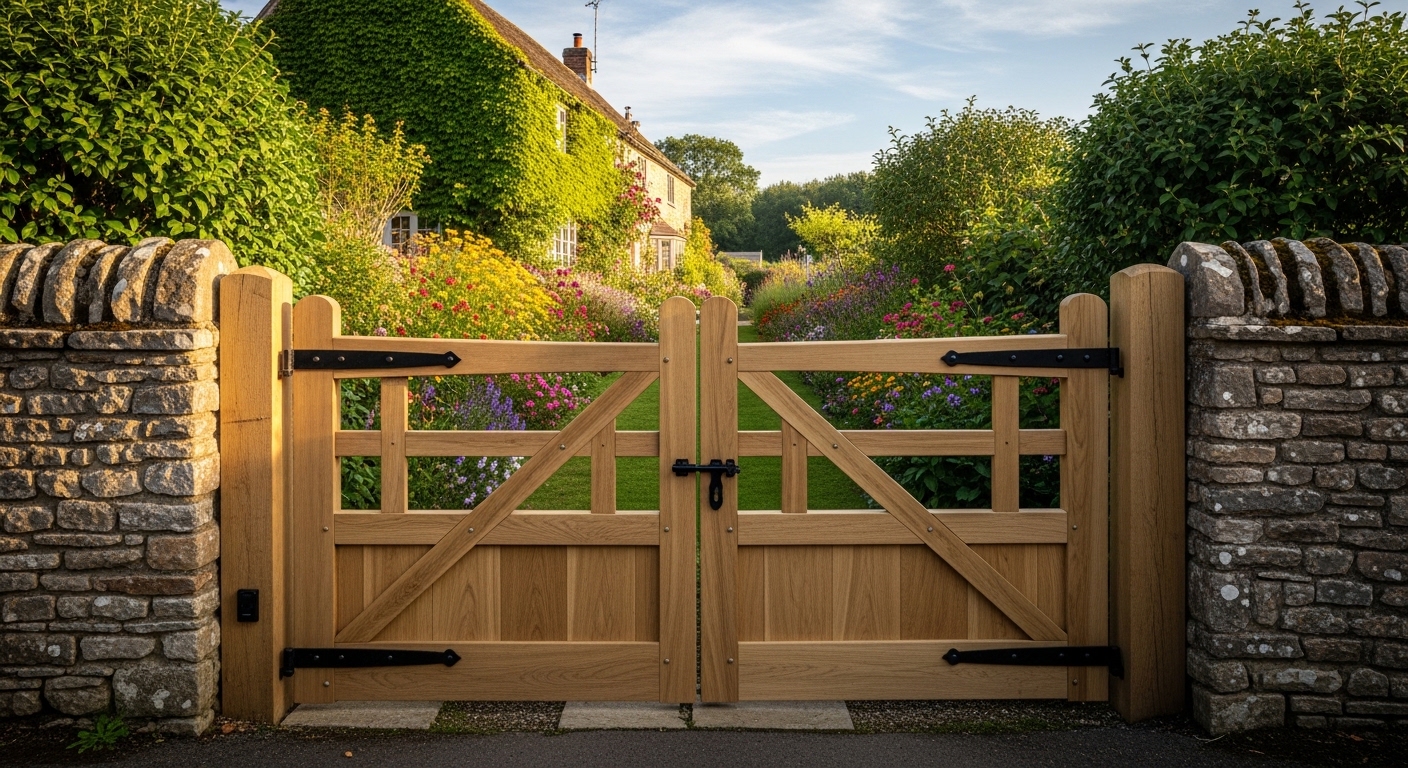
Accoya is not a species of tree but a modified timber product. Radiata pine is treated through an acetylation process that fundamentally changes the cell structure of the wood, making it exceptionally stable, highly rot-resistant, and dimensionally consistent. The manufacturer offers a 50-year above-ground guarantee on Accoya.
In practical terms, Accoya does not swell, shrink, or warp in the way that natural timber can. It takes paint and stain exceptionally well and holds finishes for longer than comparable unmodified timbers. For painted gates, Accoya is arguably the best substrate available.
The main downside is cost. Accoya gates typically cost in a similar bracket to oak, and the acetylation process makes Accoya significantly more expensive than iroko.
Maintenance: What Each Timber Actually Requires
- Iroko: annual oiling with a quality exterior oil (about 30 minutes per gate), re-staining every 3 to 5 years if a stained finish is used
- Oak: annual oiling or staining, attention to tannin staining on adjacent surfaces in the first two years
- Cedar: annual treatment with a penetrating exterior oil or preservative stain, close attention to areas where moisture might collect
- Accoya (painted): exterior paint touch-up every 5 to 7 years rather than the 2 to 3 years typical of painted softwood
- Accoya (oiled): treat similarly to iroko, but the finish lasts noticeably longer between applications
Which Timber Should You Choose?
For most London homeowners, iroko represents the best balance of appearance, durability, and cost. If you want the absolute best natural timber and budget is genuinely secondary, European oak is the traditional premium choice. Choose cedar if you have a very large gate opening where weight matters. Choose Accoya if you want the maximum possible lifespan with the lowest possible maintenance.
Your gate installer will have views based on years of seeing how these timbers actually perform in real London conditions. Their recommendation is usually well grounded in direct experience, and it is worth listening carefully to their reasoning before making your final decision.