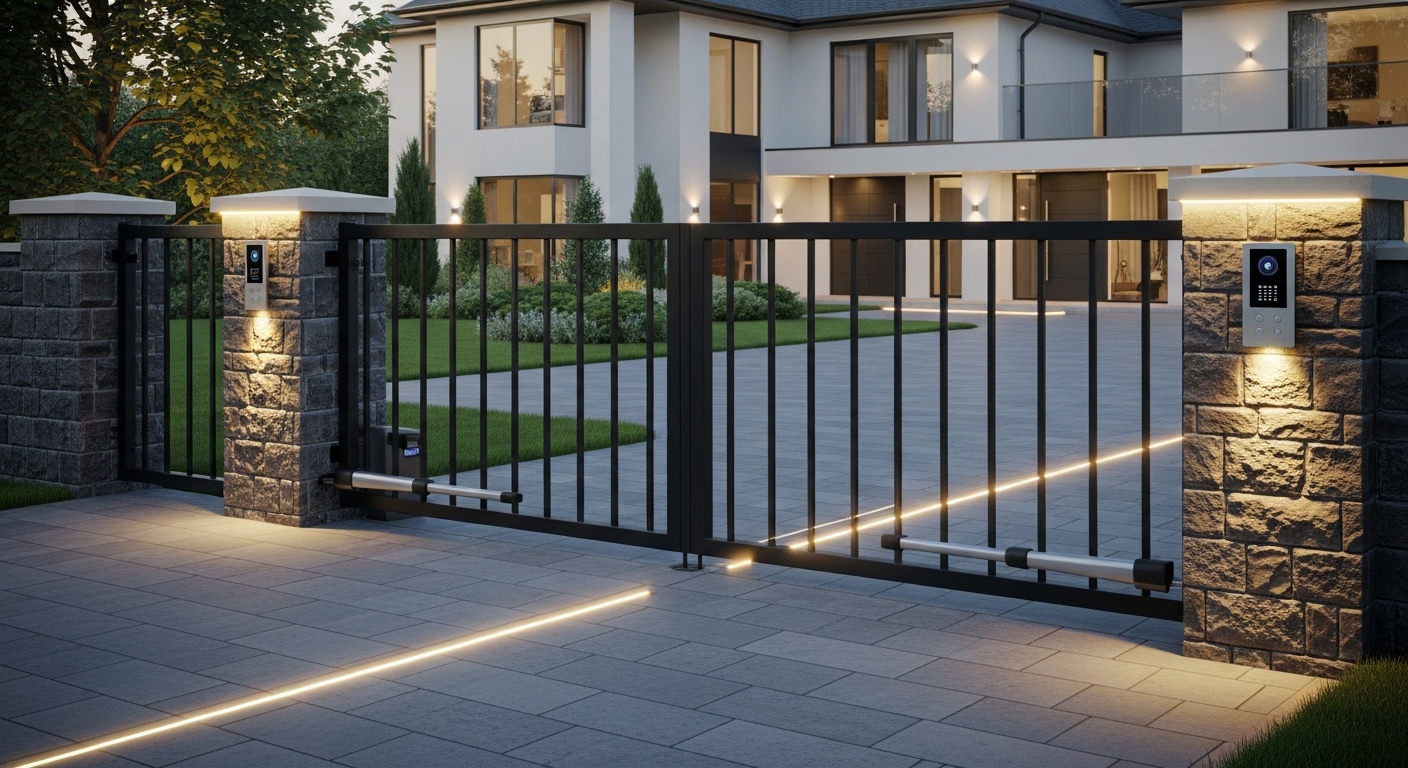
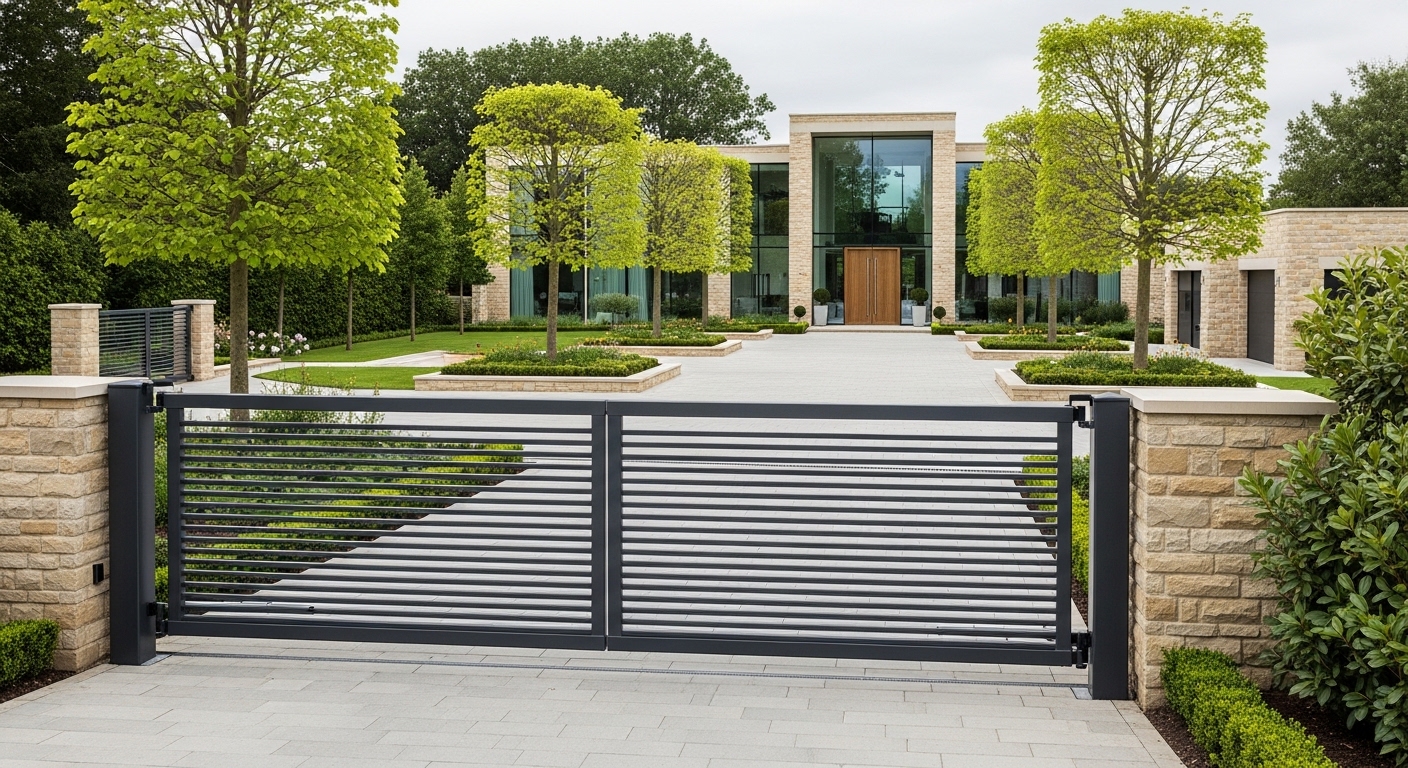
Automated driveway gates are genuinely powerful pieces of machinery. A typical residential gate weighs between 100 and 400 kilograms, and the motor that drives it generates considerable force throughout the opening and closing cycle. Without the right safety features correctly installed and regularly tested, an automated gate can cause serious injury to people, pets, and vehicles.
Gate safety incidents do occur, and the overwhelming majority of them are preventable with properly specified, correctly installed, and well-maintained safety equipment. UK regulations require most of these features as standard, and any reputable London installer will fit them as a matter of course rather than as optional extras.
Photocells: The First Line of Defence

Photocells are infrared sensors mounted on the gate posts that project an invisible beam across the gate opening. If anything interrupts that beam while the gate is in motion, the gate stops immediately and reverses. They are the most fundamental safety feature on any automated gate and should be present on every installation without exception.
A standard installation includes one pair of photocells positioned at around 30 centimetres above ground level. Better-specified installations add a second pair at 60 to 80 centimetres, which catches objects that the lower beam might miss, including children on bikes, pushchairs, and smaller pets.
Photocells need to be kept clean and correctly aligned to work properly. Dirt, spider webs, and vegetation growth can all disrupt the beam. Checking photocell function should be part of every annual service visit.
Free Matching Service
Ready to get driveway gate quotes?
Get matched with vetted London installers — no obligation, no cost.
Safety Edges: Contact Protection as a Backup
Safety edges are pressure-sensitive rubber strips fitted to the leading edge of the gate panel. If the gate makes physical contact with any object during travel, the pressure triggers an immediate stop and reversal. They provide a contact-based layer of protection as a secondary backup to the photocells.
For sliding gates, safety edges are typically fitted to the leading edge and to the closing post. For swing gates, they go on the leading edge of each leaf and, ideally, on the closing face of the opposite post.
Safety edges do degrade over time. The rubber can harden, crack, or detach. During an annual service, the engineer should physically compress the edge strip and confirm the gate reverses correctly. If the strip is visibly deteriorating, it should be replaced rather than left to fail silently.
Auto-Reverse and Force Limitation

Modern gate motors have built-in force sensing that monitors resistance throughout the gate travel. If the gate encounters an unexpected obstacle, the motor detects the change in load and reverses automatically.
Force limitation is a legal requirement under the Machinery Directive. The maximum crushing force at any point of the gate travel must not exceed 150 Newtons sustained over five seconds, with a peak of no more than 400 Newtons. Your installer should measure and confirm this during commissioning using a calibrated force measurement device.
Warning Lights and Visual Signals
A flashing amber warning light should activate whenever the gate begins to move, continuing throughout the full opening and closing cycle. This alerts pedestrians, cyclists, and other road users approaching from outside. In London, where pavements are busy and pedestrians pass close to driveway entrances without expecting movement, this is a particularly important feature.
Manual Release and Power Failure Planning
Every automated gate must have a manual release mechanism that allows the gate to be operated by hand in the event of a power failure or motor fault. This is usually a key-operated barrel lock on the motor housing that disengages the drive gear.
The manual release should be tested as part of every annual service and the key kept in a known location. Battery backup units are a worthwhile investment if power cuts are a concern in your area. A standard battery backup unit keeps the gate cycling for 20 to 50 open-close operations after mains power is lost.
What UK Regulations Apply to Residential Gates?
All automated gates in the UK must comply with the Machinery Directive (retained in UK law following Brexit), the Supply of Machinery Safety Regulations 2008, and the relevant British and European harmonised standards. The most directly applicable standards for residential gates are BS EN 13241 and BS EN 12453.
When your gate is installed, the installer should provide a Declaration of Incorporation or Declaration of Conformity, confirm UKCA or CE marking on the motor and control equipment, and hand over a technical file that includes a risk assessment.
Checking and Testing Your Existing Gate
- Photocell test: place an object in the gate opening while the gate is closing and check it stops and reverses immediately
- Auto-reverse test: apply gentle, steady resistance to the gate during closing — it should stop and reverse within a second or two
- Warning light test: watch for the amber light activating as soon as the gate begins to move
- Manual release test: confirm the release key operates smoothly and disengages the drive as expected
- Safety edge test (if fitted): press firmly on the rubber strip and confirm the gate reverses
- Remote range test: check remotes operate reliably from the furthest point you regularly use them
If any of these tests produce an unexpected result, book a service visit promptly. Do not continue using an automated gate that fails a basic safety check. The cost of a service call is negligible compared to the potential consequences of a safety failure on a gate that weighs several hundred kilograms.