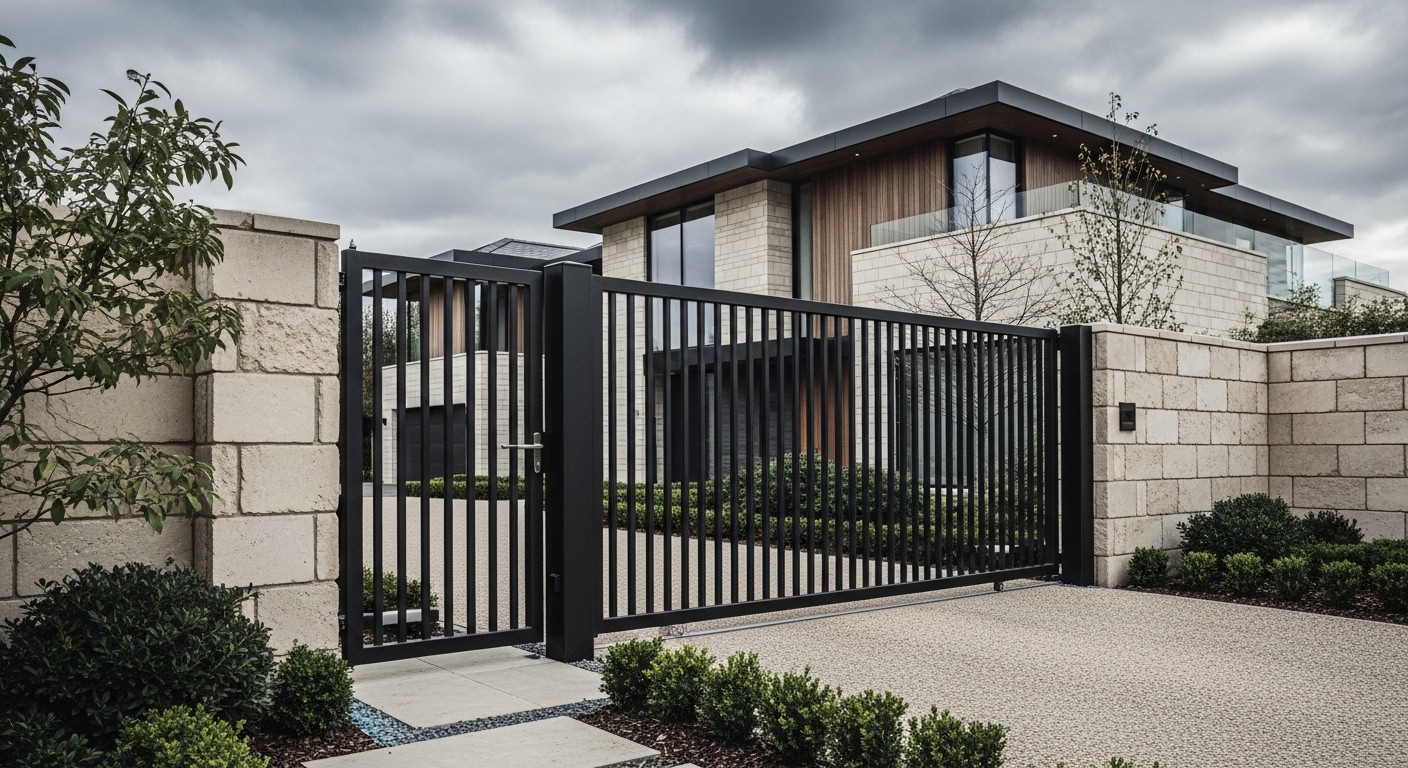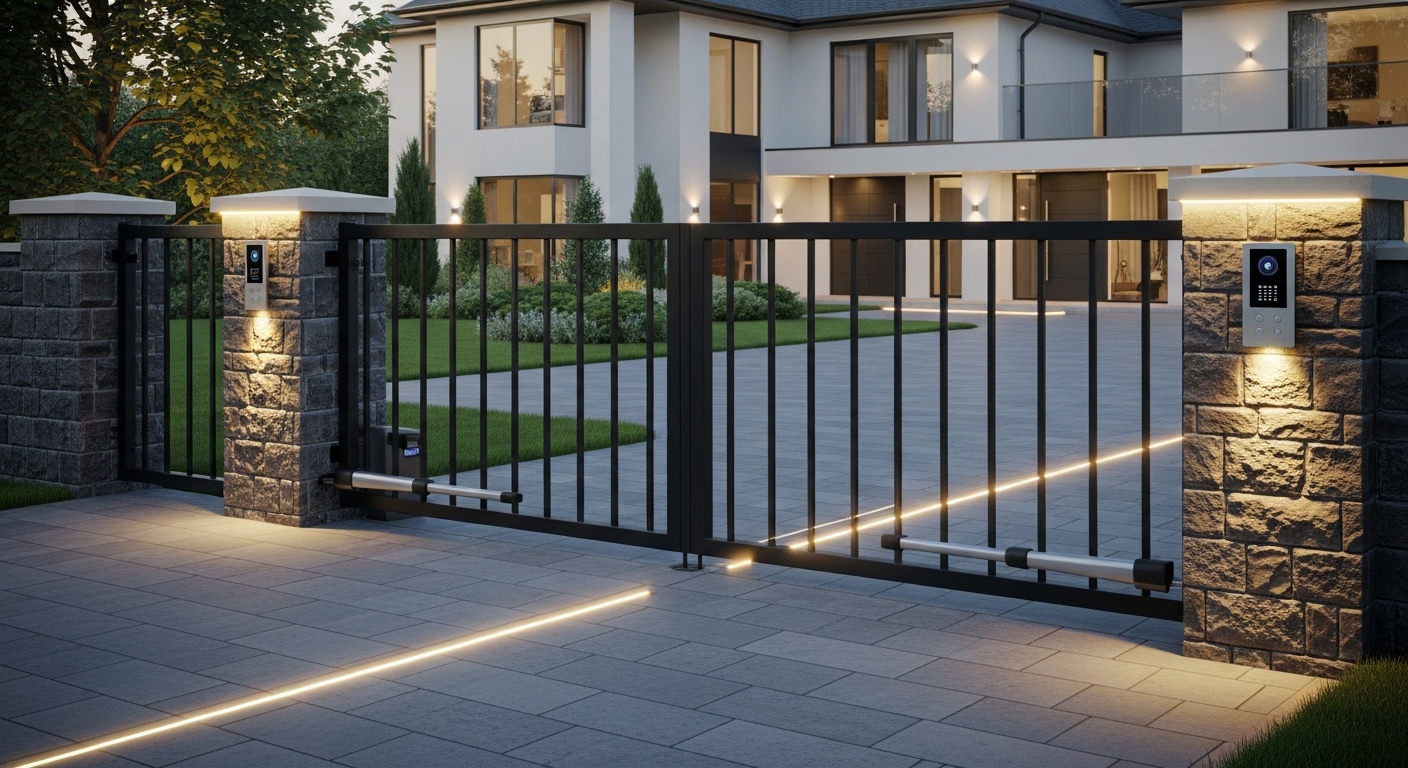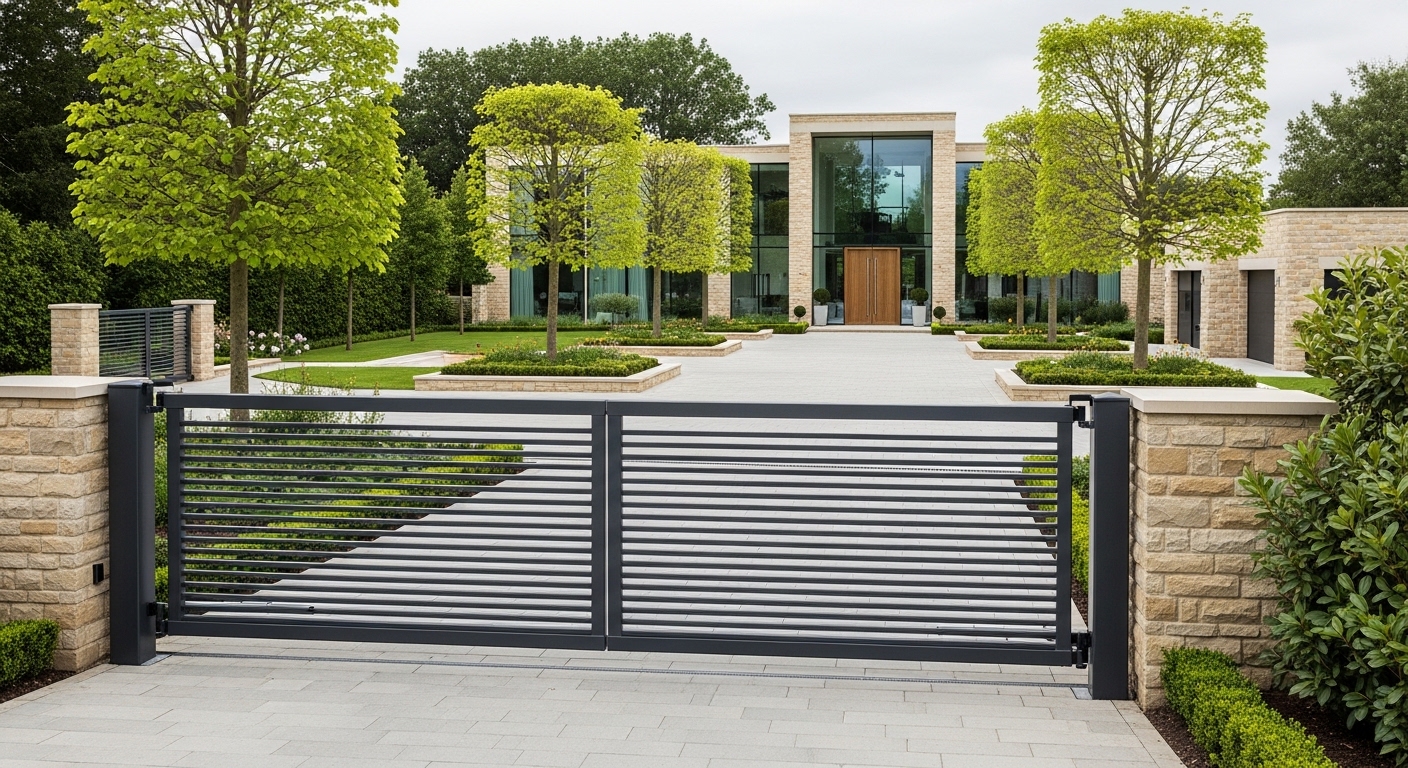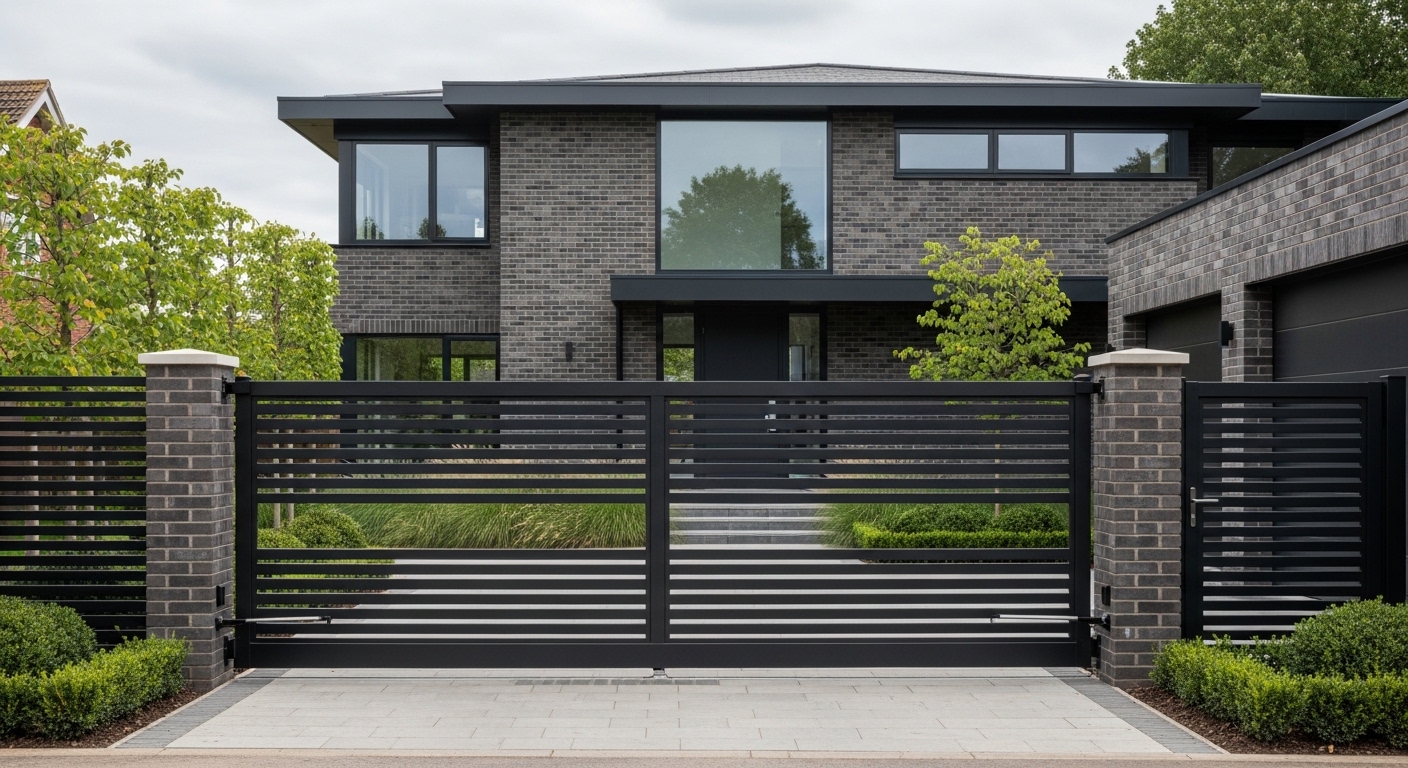
This is the question every London homeowner asks when they start looking at automated driveway gates. Both sliding and swing options will secure your property, both can be fully automated with intercoms and smartphone control, and both come in a huge range of materials and styles. The real difference lies in how each type interacts with your specific driveway layout.
After speaking with experienced London installers and homeowners who have lived with both gate types, we have put together this honest and detailed comparison. There is no universally superior option. The right choice depends entirely on your property, your plot, and how you use your driveway day to day.
Space: The Most Important Factor
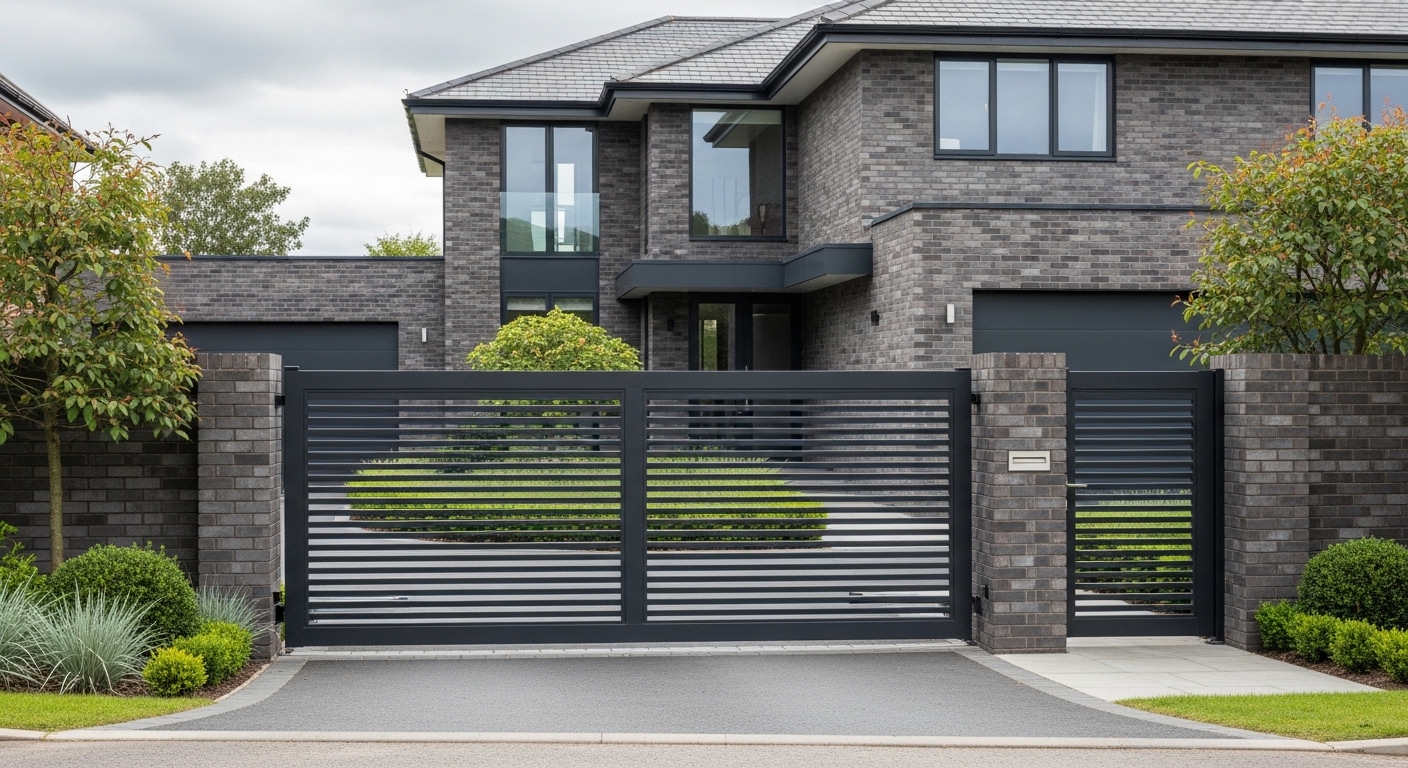
Swing gates need room to open. A standard pair of leaves each one metre wide needs at least one metre of clear space behind the gate line to complete their arc. If cars park close to the entrance, or if the driveway is short and the garage sits tight behind the gate line, swing gates will not work safely.
Sliding gates need lateral space instead. The gate panel slides along your boundary wall or fence, so you need clear space to one side equal to the full gate width, plus around half a metre for the motor housing. On most London plots with a side wall or return fence, this works well.
Free Matching Service
Ready to get driveway gate quotes?
Get matched with vetted London installers — no obligation, no cost.
Cost: What You Actually Pay
Swing gates are typically £500 to £2,000 cheaper than equivalent sliding systems for the same width and material. The saving comes from simpler groundwork, lighter motor requirements, and less engineering complexity overall.
For a standard 3.5-metre opening in steel or aluminium, expect to pay roughly £3,500 to £7,000 for swing gates versus £4,500 to £9,000 for a sliding system. Both figures include supply, installation, a basic automation package, and safety photocells.
However, if your driveway requires significant adaptation to accommodate swing gates, such as levelling a slope or extending the driveway surface, the cost advantage can disappear. On certain plots, sliding is actually cheaper when everything is accounted for.
Slopes and Gradients in London
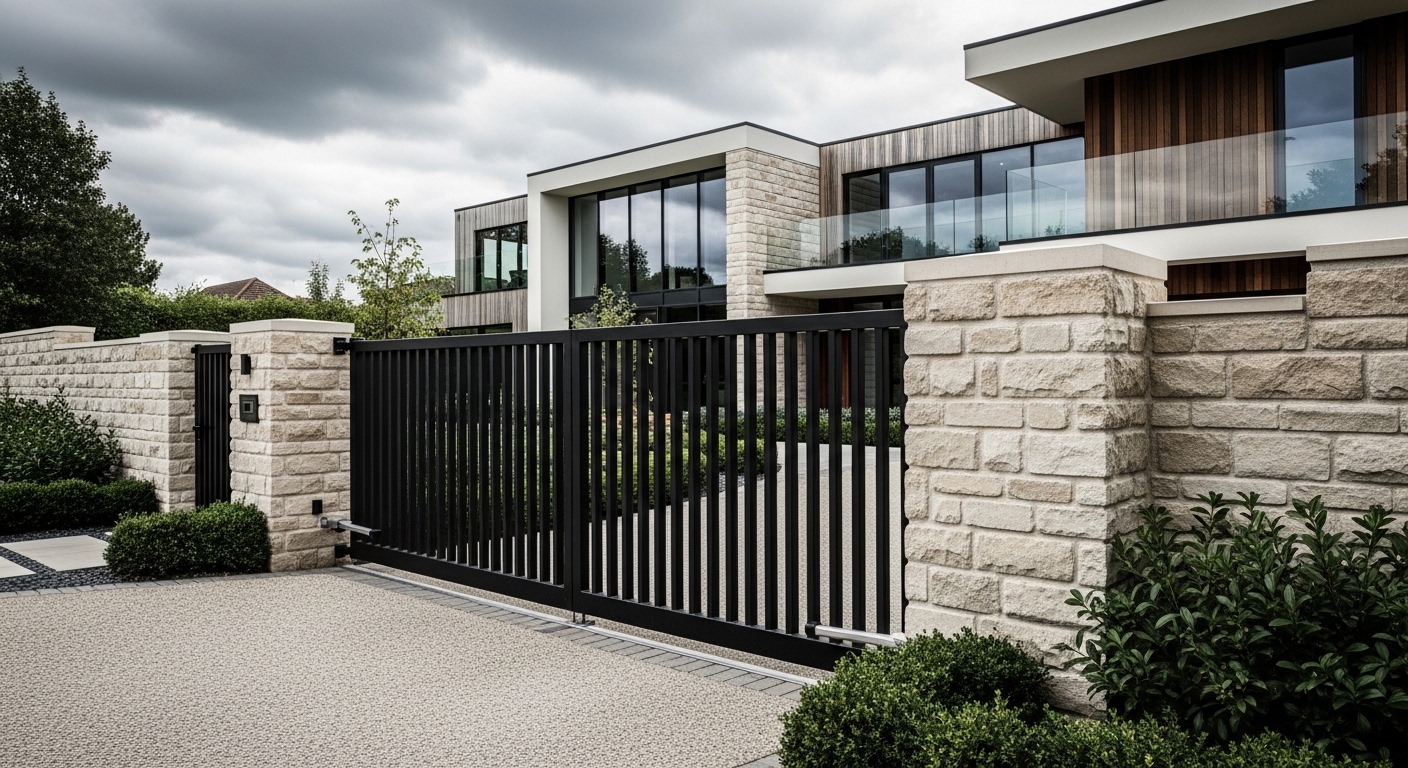
London has a surprising number of sloped driveways, particularly in hilly areas like Highgate, Crystal Palace, Muswell Hill, Hampstead, and parts of South London. Swing gates perform poorly on significant gradients because the base of the gate can scrape the ground during operation.
Sliding gates are naturally better suited to sloped driveways. The ground track can be set level even when the driveway surface itself slopes. Cantilever sliding gates, which use no ground track at all, are the most effective solution for genuinely steep London driveways.
Security: Which Type Is Stronger?
Both gate types offer strong physical security when properly installed. The key variables are material, construction quality, and the strength of the posts or pillars rather than the gate type itself. A solidly built steel sliding gate and a solidly built steel swing gate present similar resistance to forced entry.
For maximum security on a swing gate, ask your installer about anti-lift hinges, a central anti-throw bolt, and ground anchors. These modest additions significantly improve the forced-entry resistance of any swing gate system.
Aesthetics: Which Looks Better?
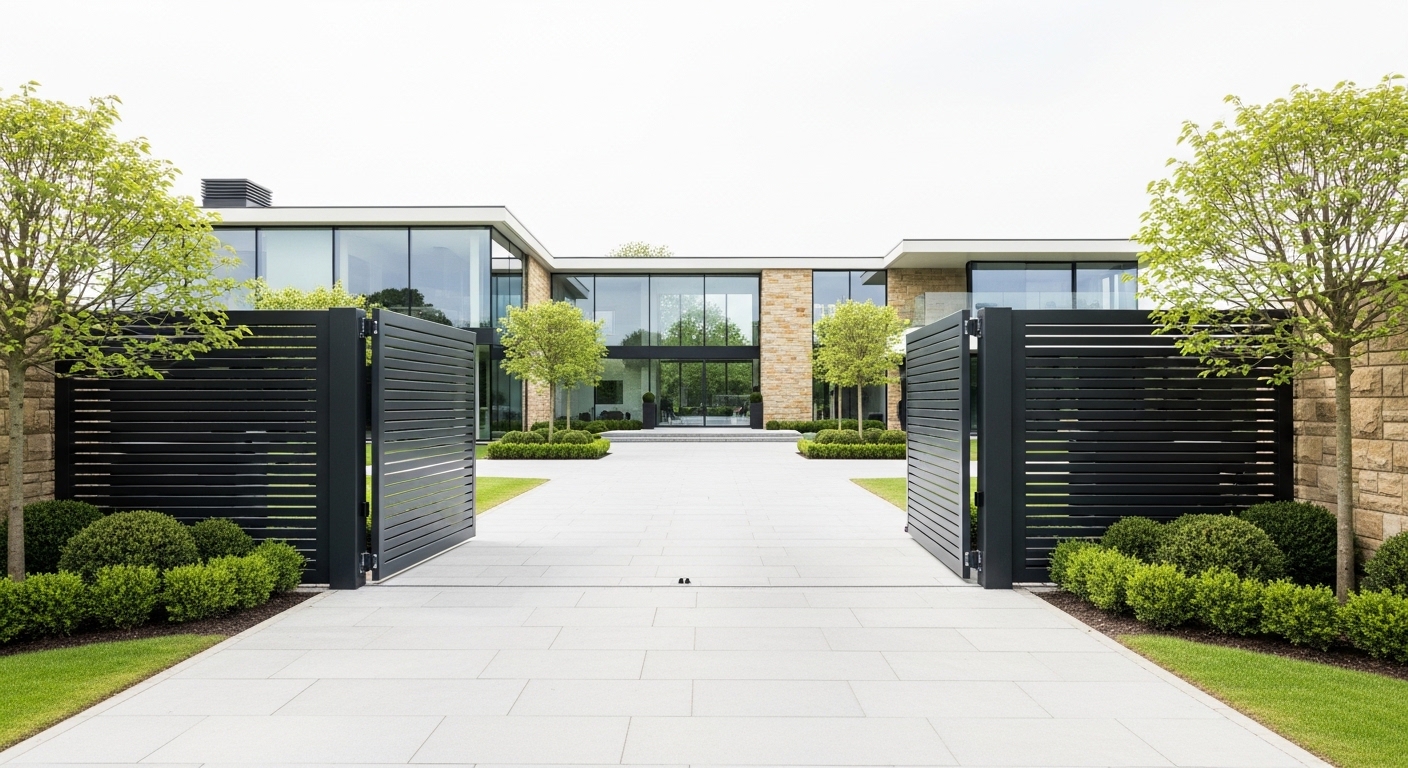
Swing gates have a timeless, traditional quality. The symmetry of a pair of leaves opening inward suits period properties particularly well. With underground motors completely hidden, the gate and pillars can be the only visible elements.
Sliding gates have a more contemporary, architectural quality. A single panel gliding smoothly along the boundary looks crisp and modern. They work especially well with horizontal flat-bar metal designs, slatted timber panels, and minimalist architectural styles.
Reliability and Day-to-Day Maintenance
Both types are highly reliable when fitted with quality motors from established manufacturers. Sliding gates have a slight advantage in windy conditions because the gate is fully supported along its track or rail. A large swing gate caught by a strong gust places considerable strain on the hinges and the motor.
Sliding gate tracks need occasional clearing of debris, leaves, and grit. Swing gate hinges benefit from periodic lubrication. Neither task takes more than a few minutes and neither should be used as a serious mark against either type.
Our Recommendation by Property Type
- Short London driveway with a gate set close to the road: sliding gate almost certainly the better choice
- Sloped driveway in a hilly borough: sliding gate, potentially cantilever if the slope is steep
- Period property with a longer flat driveway: swing gate, ideally with underground motors
- Modern new-build with architectural landscaping: sliding gate with horizontal slats or flat bar design
- Very wide opening over 5 metres: sliding gate, as a pair of swing leaves becomes impractical
- Conservation area where a traditional look is required: swing gate, possibly with wrought iron or timber
The most reliable way to make the right call is a free site survey from one of our vetted London installers. They will assess your specific plot, advise on which type works with your space, and give you an itemised quote for both options if you want to compare them directly.