
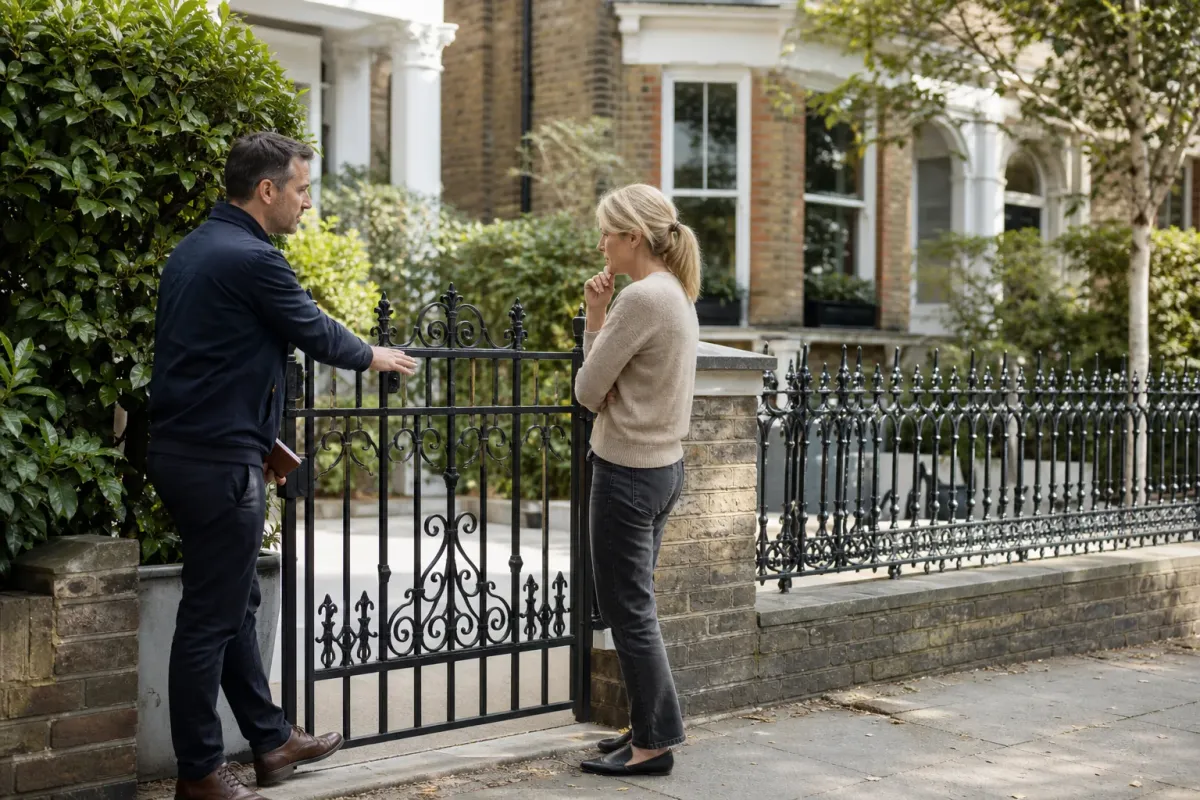
Identify what gives the boundary its character
Photograph the existing gate, railings, piers and adjacent frontage. Note original details you want to retain and damage that needs repair. Find the council’s conservation-area appraisal or management guidance for the actual address.
Avoid assuming that all period homes need the same metalwork, colour or dimensions. A new gate should be discussed in the context of that boundary and the applicable planning controls.
Separate design choices from permission
Check conservation designation, any Article 4 direction, listed status and existing conditions. Demolition or alteration of a boundary can raise a different question from adding automation. Ask the planning authority to identify the process for the complete proposal.
Our Article 4 guide explains how to read a direction. Use the council directory to locate the responsible authority.
Consider repair before replacement
Ask a suitable metalworker or joiner to assess the existing gate and supports. Retaining sound fabric may be an option, but condition and safe operation must guide the proposal. Compare repair, replacement and automation as separate pieces of work.
Our metal-gate restoration guide covers material identification and finish questions. Do not remove historic features before the necessary advice or consent.
Show the complete proposed entrance
Drawings should show gate proportions, infill, pillars, finish and opening path. Include visible controls, cable routes, drainage and groundworks. A concealed motor still needs foundations and maintenance access.
Agree who obtains permissions and which approved details govern fabrication. Compare the quotation against those drawings before ordering.
Further reading: Planning Portal gate and boundary guidance.