
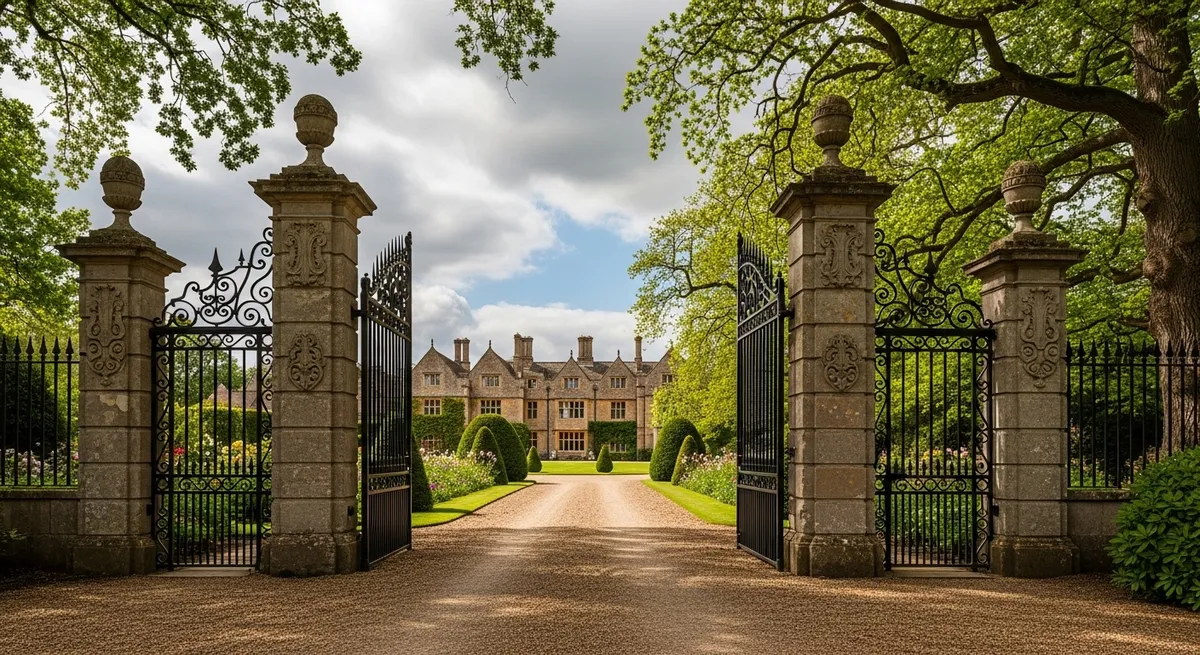
Traditional appearance with a clear material specification
Scrollwork, bars and decorative tops can suit a period frontage, but the description wrought iron does not establish what a newly made gate contains. Ask the fabricator to state the actual metal and construction. Keep that distinction clear when comparing a new fabricated gate with restoration of an older gate.
Bring photographs of existing railings, pillars and neighbouring details. Discuss the design and finish together, including the appearance from inside the property.
Survey supports, access and opening space
The gate and its supports need to suit the entrance. Check the condition of existing pillars, ground levels and the route people use on foot. Agree hinge or running-gear details, handles and locks. Discuss automation before fabrication so the design can accommodate the selected equipment.
If you want to keep an existing gate, request a repair assessment before deciding to replace it. Structural condition and access requirements should guide that decision.
Protect the finish and plan aftercare
Ask for the proposed surface preparation and protective coating system in writing. Confirm how to inspect it and deal with damage. Avoid assuming that all metal finishes need the same treatment or that any coating removes the need for maintenance.
For an automated entrance, include system-specific servicing and handover instructions. Obtain written warranty terms for the gate, coating, installation and motors.
Compare scope and check local restrictions
Include fabrication, finishing, delivery, supports, fitting and any electrical or access-control work in the quote. Review the installed cost checklist before comparing totals. Check the position with your local authority before altering a listed property or a boundary subject to local restrictions; the appearance alone does not establish permission.