
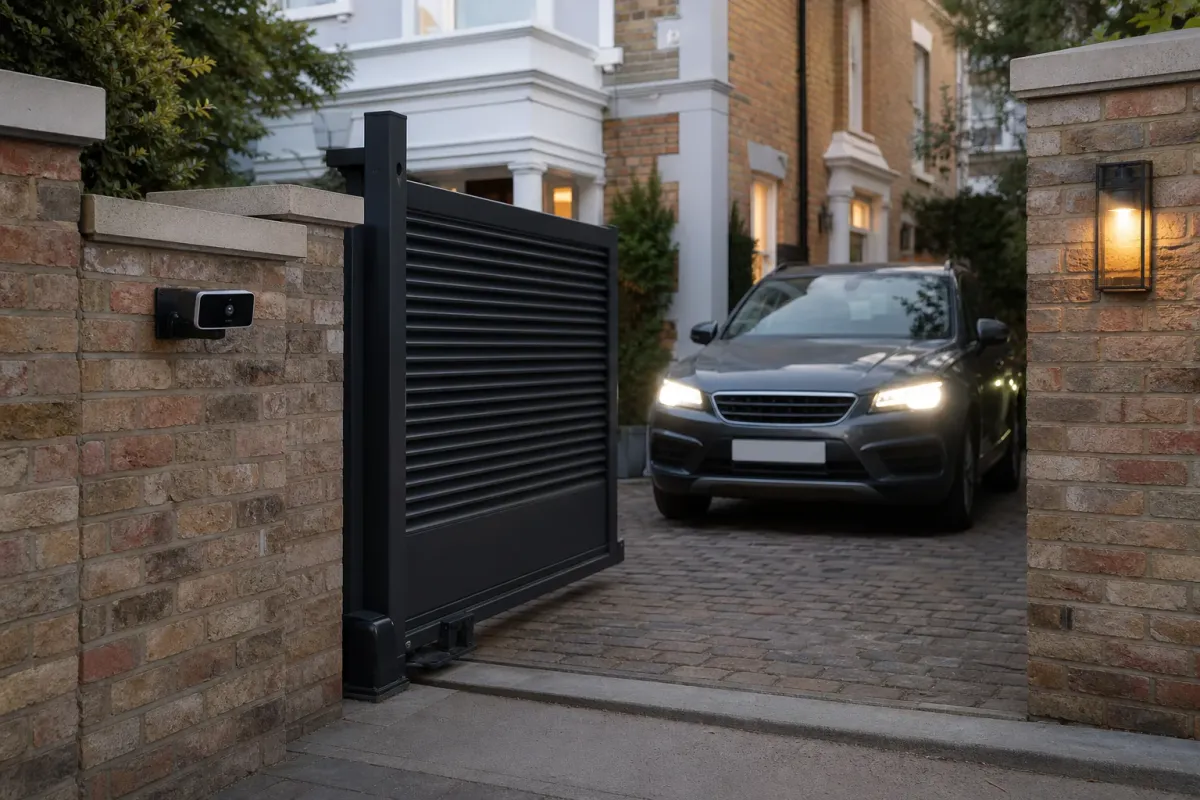
Plan the approach and fallback
ANPR reads a vehicle registration and checks it against access permissions. It does not establish who is driving or prevent a second vehicle following the first. Decide where the driver waits and how entry works if a plate is not read.
Do not assume a vehicle can drive through without stopping. Camera recognition, the command to the controller and safe gate movement are separate parts of the sequence. Include visitors, deliveries and pedestrian access in the plan.
Check recognition at the actual entrance
Survey camera position, approach angle, lighting, headlight glare, stopping distance and the expected plate types. Ask the supplier to demonstrate the proposed equipment under the conditions that matter at your site.
A manufacturer’s performance figure under defined test conditions is not a guarantee for every vehicle or weather condition. Agree a keypad, intercom or other authorised fallback.
Manage permissions and records
Decide who can add, remove and review authorised registrations. Confirm expiry for temporary vehicles, administrator access and account recovery. Ask whether the system records images or events, where it stores them and how long it keeps them.
Where data-protection law applies, the operator must address the purpose, lawful use, notice, retention and access controls. Consult ICO video-surveillance guidance. A product label does not make the whole installation compliant.
Specify the complete installation
Include camera and controller models, network and power, gate interface, subscriptions, commissioning and user training. Confirm ongoing support and the effect of connection or power failure.
Compare video entry and keypads for visitors. Send your entrance layout and expected use when you discuss your entrance.