
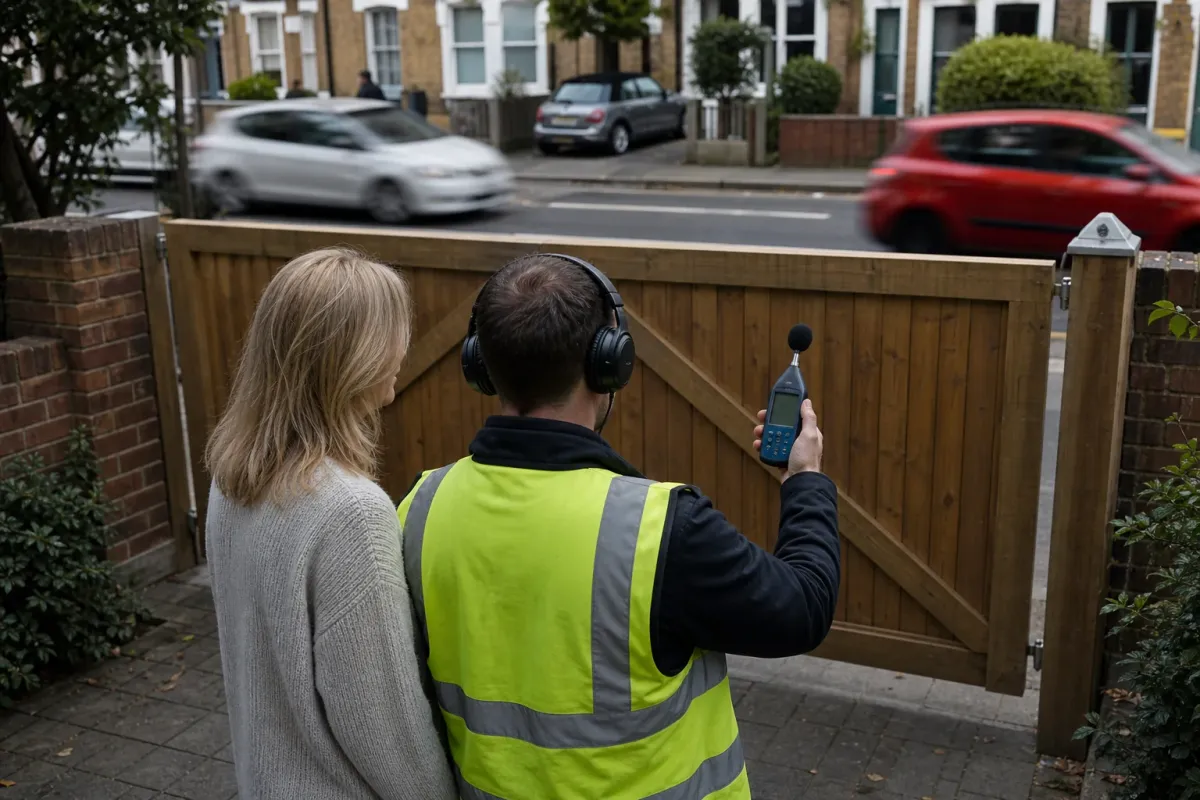
Do not budget on an untested decibel claim
A gate may change the openness of the front boundary, but its appearance and weight do not establish a particular reduction in traffic noise. Sound can reach the property around and above the entrance, through gaps and by routes unrelated to the gate.
Ask for acoustic evidence that fits the actual proposal before paying for a promised numerical improvement. A result from another property cannot establish the outcome at yours.
Assess the whole frontage
Show an acoustic adviser the road, gate position, adjoining walls, ground levels and the windows or garden area you want to protect. Explain when the disturbance occurs and whether the gate would be open during those periods.
Gate, fence and planting claims cannot simply be added together into a total reduction. Consider the boundary as a whole and compare practical options for the particular source and receiving location.
Check design trade-offs
A closed gate affects views, airflow and wind exposure, and must still provide a suitable entrance for people and vehicles. Ask the gate installer to coordinate any acoustic proposal with the supports, movement and protective measures.
Choose gate materials and layout for the complete entrance. If noise reduction is the main objective, obtain the acoustic assessment before ordering a gate on that promise.