
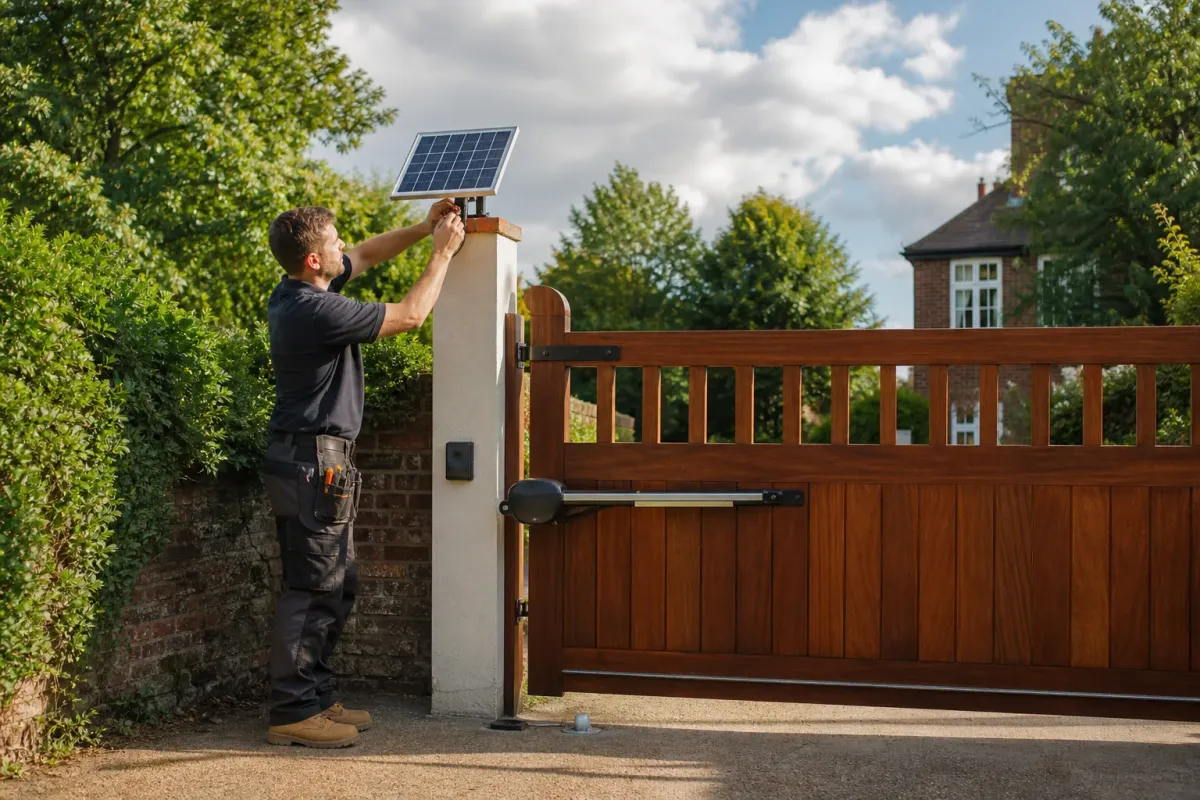
Start with the complete electrical load
List the motors, controller, intercom, receiver, sensors and any lighting or heaters. Record movement demand and the equipment that remains powered while the gate waits. The number of opening cycles alone cannot determine the required panel and battery.
Use measured consumption or specifications for the exact equipment. Our running-cost calculation separates movement from standby demand.
Design for the site and winter use
Ask the designer to assess panel location, orientation, shading and seasonal generation. Trees, buildings and winter sunlight can change the available energy. An annual generation average does not establish reliable operation through a run of poor weather.
The proposal should state expected use, assumptions for low-generation periods and the battery reserve. Request a site-specific calculation rather than a generic panel, voltage and battery shopping list.
Agree the fallback before ordering
Ask what happens when the battery reaches its operating limit, how you receive a warning and what access remains possible. Confirm charging arrangements, battery replacement and safe manual operation.
A solar supply does not remove the need to assess gate movement, supports or protective measures. The installer must consider the complete powered entrance and how it behaves during a power shortage.
Compare the lifetime scope
Price the solar equipment, mounting, cabling, batteries, maintenance and replacement alongside a suitable mains-supply proposal. Include trenching and reinstatement for the mains option. A payback claim needs those actual costs and load assumptions.
Send the gate location, photographs and expected use when you discuss your entrance. Ask for equipment availability and supported configurations in writing before purchasing a kit.