
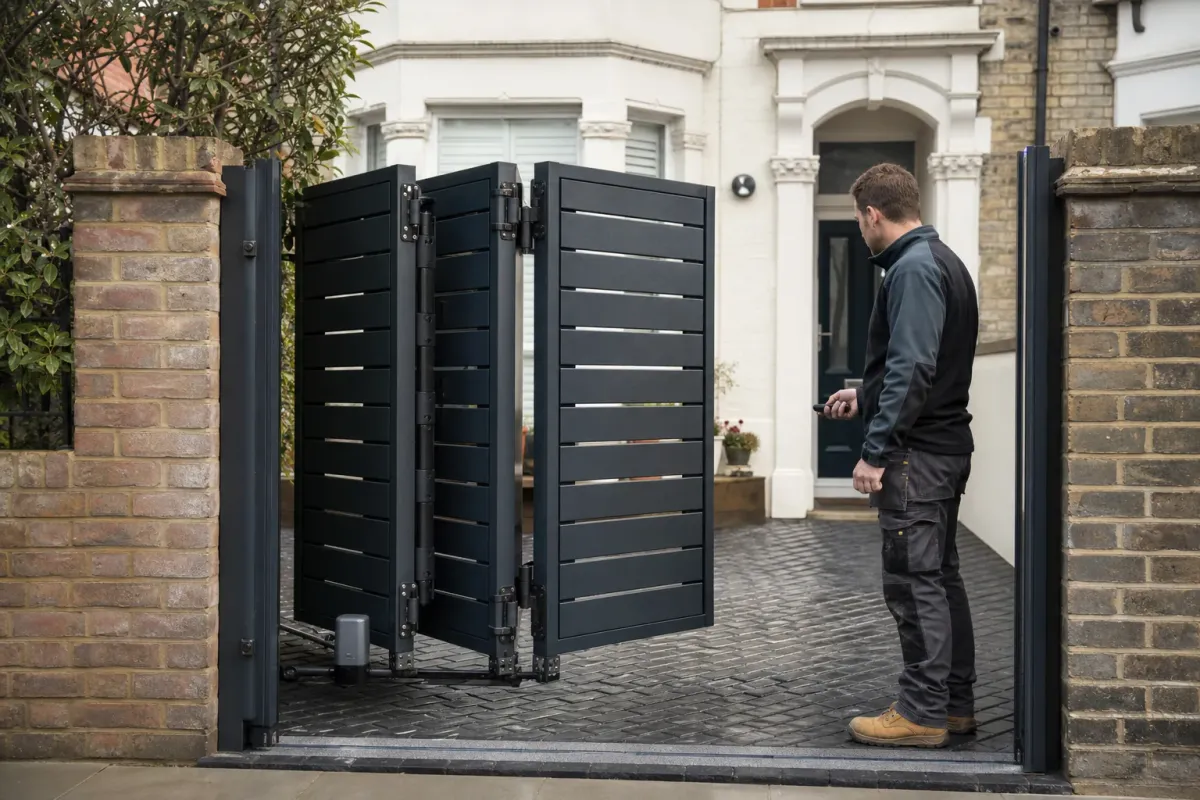
Compare two different movement paths
Bi-fold leaves fold as they swing, reducing the depth occupied by some designs compared with a single full-length swing leaf. Sliding gates move alongside the opening and need a clear path beside it. Both arrangements need supports and space for their moving parts.
For a short drive, draw the parked vehicle, its doors, the gate’s entire movement and a pedestrian route. Ask the installer to mark the dimensions of the actual mechanism rather than applying a percentage saving from another product.
Check folding joints and side space
Folding designs need assessment around intermediate hinges and the area where the panels gather. Sliding designs need assessment along the run-back area and between the leaf and nearby walls or fencing.
If one sliding leaf will not fit beside the entrance, compare telescopic panels. More panels change the support, movement and maintenance requirements; they do not make the surrounding space irrelevant.
Include slopes and everyday access
Ground levels may interfere with a folding swing path or require changes to a sliding layout. Discuss drainage, parked-car position, visitors and bins. Ask what happens during manual release, particularly on a slope.
Opening time depends on the selected equipment, travel and safe operation. Do not choose a layout on a universal two-second promise. A demonstration should show the proposed arrangement, including its stopping and closing behaviour.
Get comparable proposals
Request drawings, product models, groundworks, protective measures and service arrangements for both options. Use the swing and sliding comparison for the broader layout questions, then compare the complete quotations using our installed gate cost guide.