
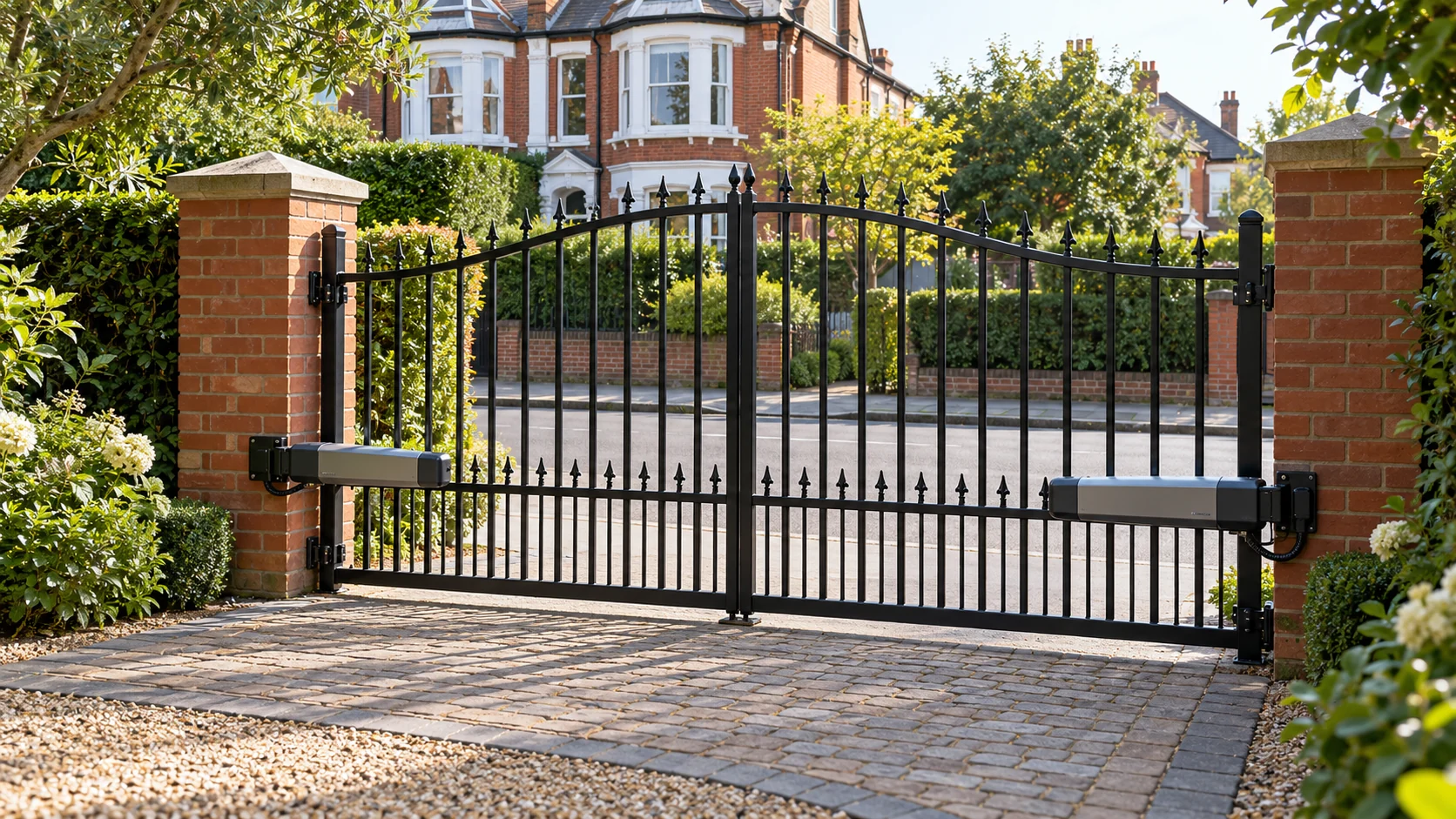
A different gate company may be able to repair electric gates installed by your original contractor. The answer depends on the equipment, its condition and whether the new engineer can obtain the information and parts needed to work on it. Changing contractors does not, by itself, mean you need new gates. Equally, a company should not promise a repair before it understands the installation.
Start by requesting an assessment of the existing system. Explain who installed it, what has gone wrong and whether anyone has altered it since. Ask the contractor to confirm that it can assess your equipment before you book a visit. You need a clear account of the fault, the proposed work and anything that would prevent the engineer from returning the gates to use.
Explain why you are changing gate companies
You may have bought a property with electric gates, lost contact with the installer or decided to seek another opinion after repeated callouts. Give the new contractor that context without trying to diagnose the fault yourself. A useful opening description might be: the gates opened normally until last week, now one leaf stops short, and the previous invoice records a controller replacement. Use your own observations and documents rather than guesses about which part has failed.
If another contractor has proposed work, send the written findings and quotation. Ask the new engineer to distinguish what they can confirm from what still needs investigation. Avoid reducing the enquiry to whether they can beat the other price: proposals may cover different repairs, inspections or replacement parts. Comparing their scope matters before comparing their totals.
Send useful information before the visit
When arranging electric gate repair and maintenance, provide your postcode and describe whether the entrance has swing gates or a sliding gate. Explain whether the gate is open, closed or stuck partway, and whether you have another way into the property. For a shared entrance, identify the person authorised to arrange work and agree spending.
Gather the records you already hold. Useful material includes the original installation invoice, user instructions, service reports, previous repair invoices and photographs showing the whole entrance. Include the motor and controller model if you can read it from paperwork or an externally accessible label. Do not open an enclosure, reach around a gate or remove a cover to find a serial number.
- Describe what happened before the fault: a power interruption, building work, vehicle impact, heavy rain or a change to the controls.
- Say whether the fault is constant or intermittent, and which access method you were using when you noticed it.
- Identify changes that previous contractors made, even if you do not understand the technical description on the invoice.
- Provide photographs taken from a safe position, keeping entry codes, passwords and unrelated personal details out of them.
Do not run the gates again simply to create a video for the enquiry. Describe the behaviour you have already seen. The engineer can decide how to investigate it under controlled conditions.
Agree what the first inspection will cover
Ask whether the initial appointment covers fault diagnosis, a wider condition assessment, or both. Request the price and charging basis for that visit, including how the contractor handles additional time or a return appointment. A booking described only as a callout tells you little about the report or work you will receive.
A powered gate combines moving leaves, supports, motors, controls and protective devices. HSE's powered gate safety guidance explains that safety depends on how those parts work together in the particular installation. Ask the engineer to explain any concern about the complete entrance, even if you initially reported only a remote-control or motor problem.
Request written findings that separate the reported fault, any immediate safety concern and optional improvements. If the engineer cannot reach a firm diagnosis during the visit, ask what evidence is missing and what the next investigation would involve. Agree that further chargeable work needs your approval rather than assuming that an inspection authorises an open-ended repair.
Check support for the equipment you already have
Ask about experience with the actual motor and control system, rather than accepting a broad statement about repairing electric gates. Have the contractor identify which parts they expect to retain and which need further checks. If someone proposes a replacement component, request its make and model and an explanation of compatibility with the remaining equipment.
For an older installation, ask the contractor to check current parts support before promising a completion date. If they propose an alternative to the original component, ask why they have chosen it and what associated work it requires. Do not assume a part will fit because its housing looks similar or because the same manufacturer supplied both products.
Where the entrance includes an intercom, keypad or app, include those controls in the discussion. Ask whether the contractor can support the relevant account and programming arrangements or needs another specialist. Transfer administrative access through an agreed private process; do not put gate codes or account passwords into a general quotation email.
Missing paperwork needs a clear plan
Tell the engineer before the visit if the seller or original installer did not leave records. The documents supplied when a completed powered gate first enters service include user instructions and a Declaration of Conformity. Ask what records exist for the assembled installation, as well as manuals for individual components.
If documents are missing, ask the new contractor what they can establish by inspection and what they cannot verify. Request a list of records worth seeking from the previous owner or installer. Do not ask the contractor to treat a component manual as a complete history of the entrance, or assume that a repair visit will reconstruct every detail of the original installation.
Keep warranty questions separate from the repair scope
Before authorising work that might fall under an existing warranty, read the written terms and ask the warranty provider how it wants the fault handled. Ask whether it requires an inspection, authorisation or a particular repair route. Get the answer in writing. The existence of a manufacturer's name on a motor does not tell you what the original installer agreed to cover.
Then ask the new contractor what warranty, if any, it offers on its own proposed work. Separate parts, labour and attendance, and clarify any exclusions for retained equipment. Avoid accepting a verbal promise that leaves you unsure whether a later problem would count as a repeat of the same fault or an unrelated failure.
Compare repair, partial replacement and further investigation
Request an explanation of why the recommended work addresses the fault. If the proposal is to replace the automation, ask whether the engineer has assessed the gates and their supports for continued use. Discuss gate automation kits as a defined option, with a list of what stays and what changes.
Ask for alternatives where the evidence supports them. One proposal might cover a diagnosed component fault; another might replace several linked components. Have the contractor explain what each option resolves, what remains uncertain and what further work it excludes. Do not choose between them using the motor price alone.
If you have already paid for several repairs, bring the reports together and ask whether they describe the same unresolved problem. Use those findings to compare electric gate repair or replacement. A new contractor's opinion should help you make the next decision. It should not rely on dismissing previous work without evidence or on promising that a replacement will never develop another fault.
Agree the condition in which the engineer will leave the gate
The contractor needs to leave the gate in a safe condition and explain the outcome to the user. Ask how the contractor will explain the outcome if repairs cannot finish during the first visit. Request clear instructions on whether the gate may be used, who will arrange the next stage and how residents should manage access meanwhile.
Do not press for continued operation if the engineer identifies an unresolved safety concern. Discuss access needs before the appointment, especially where the driveway is the only vehicle entrance. Follow the installation-specific instructions supplied by the contractor rather than trying a manual-release method from a different gate online.
At handover, request a written description of the work, the fitted parts, the checks completed and any outstanding recommendations. Ask for a demonstration of the controls and the safe shutdown procedure for your installation. Keep those details with your gate records so that the next servicing contractor can see what changed. You can then judge the repair against an agreed scope rather than simply whether the gates moved when the engineer left.