
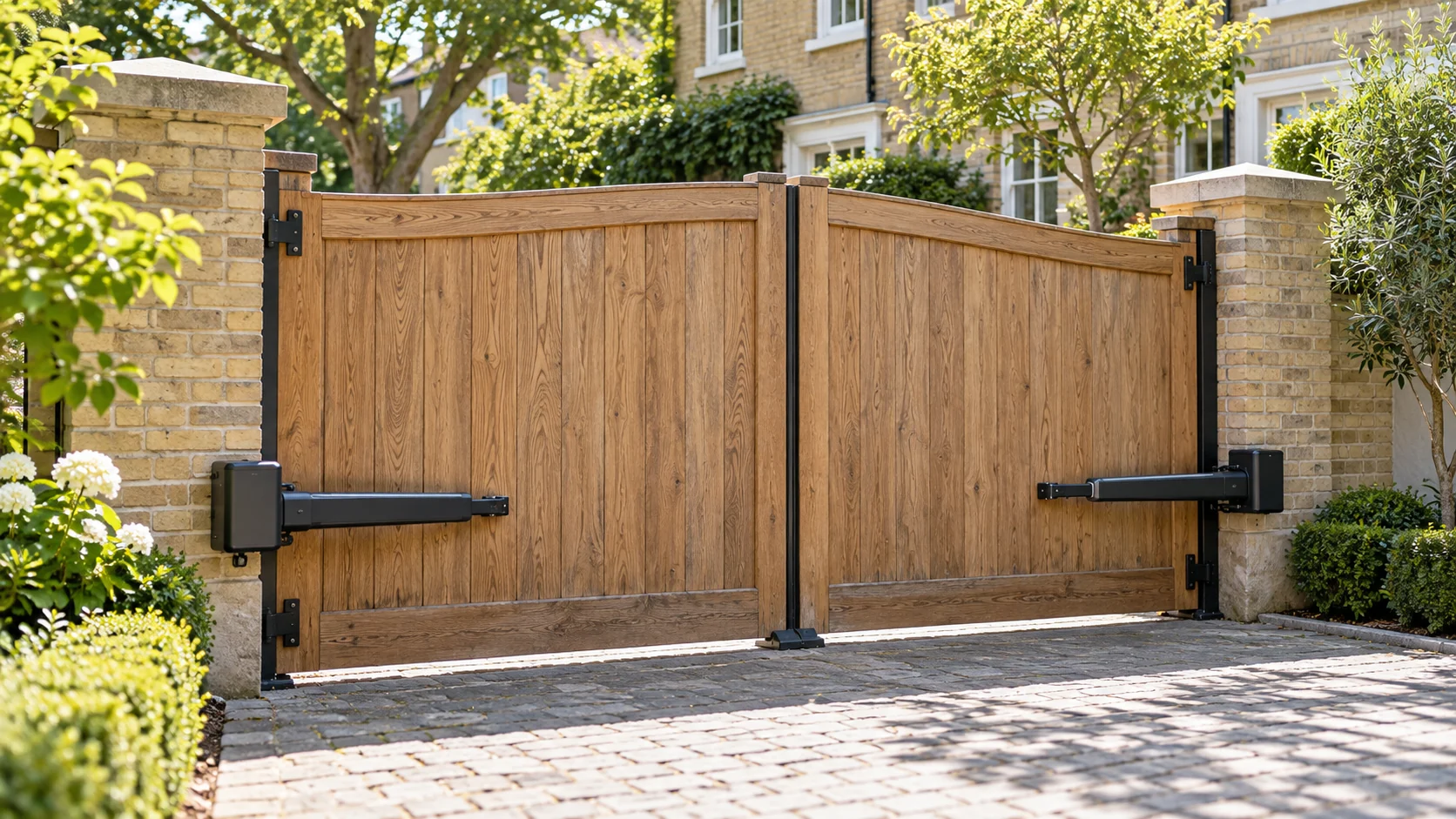
Repeated electric-gate breakdowns are a reason to review the whole repair history before approving another callout. Ask whether the failures come from the same unresolved problem, separate worn components or a wider issue with the installation. Then compare a defined repair with partial or complete replacement. The right choice depends on the evidence, the condition of what you would retain and the scope of each proposal.
A gate's age or your frustration with the last breakdown cannot answer that question alone. Nor should a contractor decide it using the price of a new motor without considering the surrounding work. Start with an inspection and a written explanation of the options. You need to know what each option fixes, what it leaves in place and what further spending remains uncertain.
Put the repair history in order
Gather invoices, service reports and any messages explaining previous faults. List when each problem occurred, the symptom you reported, what the contractor diagnosed and what they changed. Include adjustments and programming changes as well as replacement parts. If you cannot find a report, record that gap instead of reconstructing a technical explanation from memory.
Ask the next engineer to compare those records with the current fault. Did the same symptom return after the same repair? Did the earlier contractor complete recommended follow-up work? Did a later change affect equipment that had previously operated as intended? These questions give the assessment a starting point without assuming that every callout had the same cause.
Keep the financial record alongside the technical history, but separate past spending from the decision now in front of you. Money already spent does not tell you whether the next repair addresses the fault. Ask what new evidence supports the present recommendation and whether the contractor has resolved any uncertainty left by the earlier visits.
Ask for a condition assessment, not just another part
When discussing gate repair and maintenance, explain that you need help deciding what to retain. Request findings on the gates, supports, drive equipment and controls, with any limits of the inspection made clear. If you want a fresh assessment, ask about repairing gates installed by another company and provide the earlier records. Ask the contractor to identify the reason behind each recommendation rather than describing the entire installation as old.
Gate safety depends on the assembled system and its circumstances. A replacement motor does not remove the need to consider mounting strength, movement and the interaction of the controls and protective devices. Ask which existing components the proposed work relies on and how the engineer will assess them.
Separate an immediate safety concern from a reliability complaint or an optional improvement. If the engineer considers the gate unsafe, ask for written instructions about taking it out of use and managing access. Do not treat a budget decision about future improvements as permission to keep using equipment that needs safety work first.
When another repair deserves consideration
A further repair deserves a place in the comparison when the contractor can identify a fault, specify an appropriate remedy and explain the condition of the equipment that will remain. Ask why the proposed work should address the current symptom and whether previous repairs dealt with the same issue. Request evidence from the inspection rather than an assurance that this part usually fixes it.
Have the contractor confirm parts availability for the actual model and identify any alternative they propose. Ask what programming, mechanical work or checking accompanies the replacement. If the report identifies an underlying problem, such as damage around the equipment, ask whether the quotation includes addressing it or merely replacing the affected component.
Also ask what would make the contractor reconsider repair once work begins. For example, which currently inaccessible areas still need inspection, and how will you approve additional work if the findings change? This creates a decision point before the bill grows. Avoid agreeing to a succession of substitutions without an explanation of what each investigation has established.
Consider replacing the automation while retaining the gates
Ask whether the assessment supports keeping the gate leaves and supports while replacing the drive equipment and controls. Discuss gate automation kits as a separate proposal. Request an itemised list of retained and replacement components, rather than accepting “new automation” as a complete specification.
Include motors, the control panel, safety devices, remotes, cabling and connections to the intercom in that list. Ask which existing parts the contractor has verified as suitable for the proposed arrangement. If the work changes the gate's movement or control behaviour, request an explanation of what residents will notice and what training they will receive.
HSE's guidance on modifying powered gates explains that significant modifications can require a new conformity assessment. Ask the installer to explain the responsibilities and documentation applicable to the proposed work. Do not assume that replacing an individual component and creating a substantially changed powered-gate system carry identical requirements.
Give complete replacement a defined scope
If a contractor recommends new gates as well as new automation, ask what findings justify that extent of work. Request an explanation of why retaining the present leaves, hinges or supports would be unsuitable. Where the recommendation also changes the gate type, ask for a drawing that shows the proposed movement, parking position and route for people on foot.
A quotation for a complete automated gate system needs to identify more than the visible gates and motors. Ask about removal, foundations, electrical work, drainage, access controls and making good the driveway. Have the installer state which existing services or structures it intends to reuse and what remains subject to the site survey.
Include planning checks in the allocation of responsibilities where the design or boundary would change. Do not assume that describing work as replacement settles the permissions question. Ask who will check the relevant property constraints before you order, without relying on a general statement that all replacement gates follow the same rule.
Compare totals that cover the same outcome
Set the proposals beside each other and mark what each includes. A fault repair, an automation replacement and a new entrance deliver different scopes, so the lowest headline figure does not establish the best choice. Ask each contractor to describe the completed result in plain language and to identify exclusions.
- Investigation and preparation: inspection, further testing, removal and disposal, and work needed before installation can begin.
- Equipment and building work: the named components, gate supports, cable routes, drainage and reinstatement included in that proposal.
- Completion: programming, checks, instructions, documentation and demonstration of the controls.
- Commercial terms: whether VAT applies and is included, payment stages, variation approval and written warranty conditions.
Ask about retained parts explicitly. If a repair keeps the existing intercom and cabling, record that. If a replacement quote also keeps them, do not assume it provides a completely new system throughout. Make the contractors resolve differences in scope before you compare their totals.
Include disruption and access in the decision
Explain how a gate outage affects your household or property. You may need a clear pedestrian route, space for visitors to wait or arrangements for residents who arrive at different times. Ask each contractor how it proposes to manage access during the work and what you must arrange beforehand.
For a shared entrance, identify who can approve the expenditure and who communicates with users. Ask how the contractor will hand over remotes, account administration and changed entry arrangements. Keep security credentials separate from general notices. A technically suitable proposal still needs a workable plan for the people who use the entrance.
Request a programme based on confirmed equipment availability and the assessed work. Do not assume that another contractor's suggested duration applies to your installation. If access arrangements depend on a particular date, explain that constraint before accepting the quotation and ask how delays would be handled.
Ask what support follows the work
Request written warranty terms for each option and distinguish parts cover from labour or attendance. Ask how the contractor handles a recurring fault and what it excludes where existing equipment remains. Do not fill gaps in one proposal using promises made by another company or a general claim about the manufacturer's reputation.
Ask for the maintenance and inspection recommendations relevant to the completed installation. Powered gates need regular checks and maintenance. Have the contractor explain the tasks for a competent engineer and any routine care that the user instructions allow you to undertake. Record the proposed servicing scope instead of assuming every service visit includes the same work.
Make the decision from the findings
Before accepting another repair, ask yourself whether you can explain the diagnosis and why the proposed work addresses it. Before accepting replacement, ask whether you understand what will remain, what will change and why. If either answer is unclear, request clarification in the written proposal before committing.
Then agree the acceptance and handover arrangements. Request the work record, relevant instructions and an account of any outstanding limitations. Ask the contractor to demonstrate the agreed operation and explain the response to a future fault. Keep the new documents with the previous reports so that the next decision starts with evidence. That gives you a practical basis for choosing a repair, an automation upgrade or a replacement entrance.