
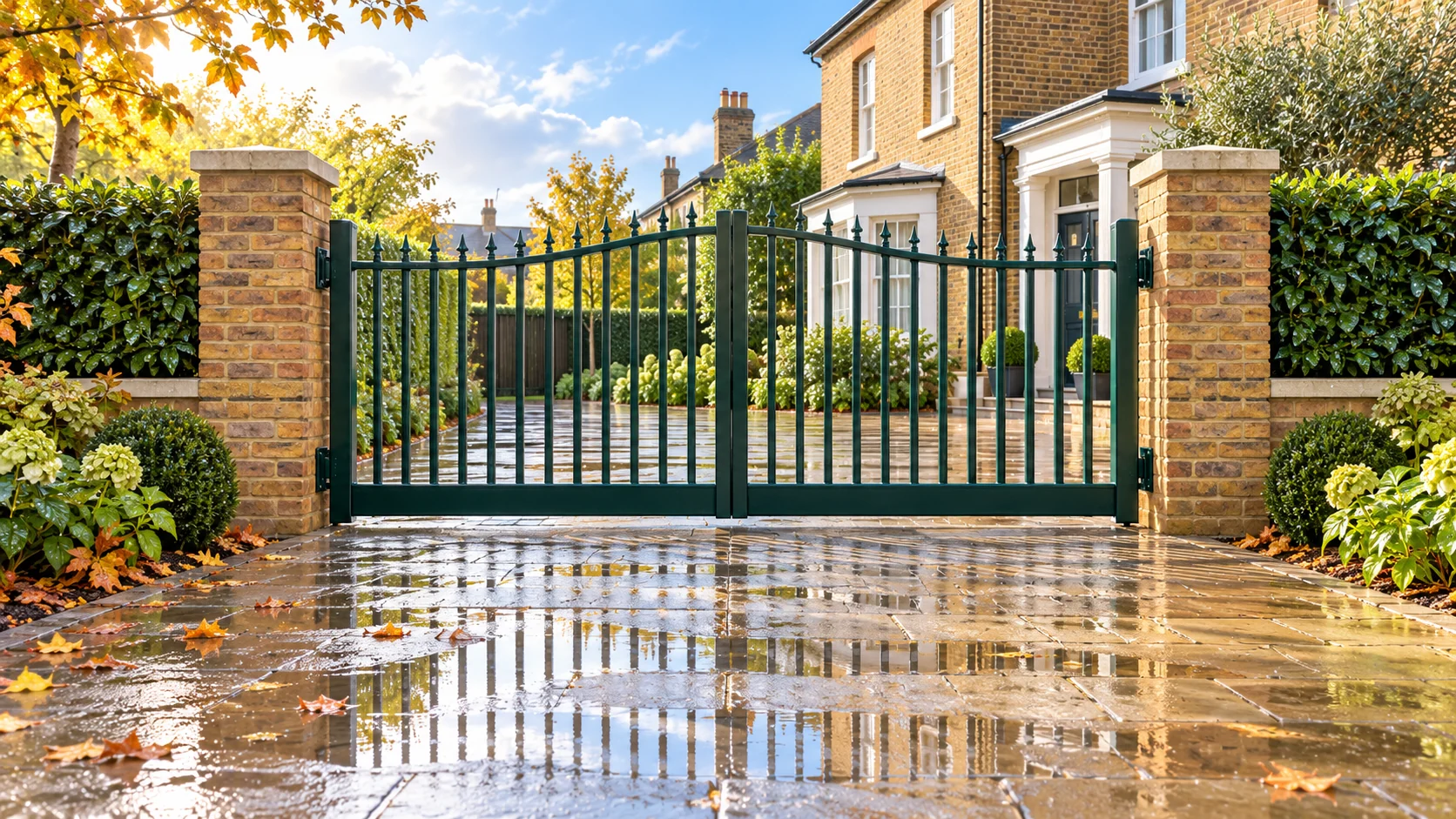
Electric gates that stop working after rain need an investigation of the installed system, not an automatic motor replacement. Water may have reached electrical equipment, a protective device may be responding, or rain may have coincided with a separate fault. The pattern is useful evidence, but it does not identify the damaged part.
The short takeaway: stop repeated attempts, keep clear of suspect equipment and report what happened. Do not open electrical covers, bypass a sensor or try to dry out the controls yourself. If flooding or electrical damage is suspected, arrange competent help before using the gates again.
Gates stopped working after rain?
Tell us what stopped working and where you noticed water. Ask about investigating the rain-related fault and the repair work your gates may need.
In this article9 sections
Start with the symptom, not a diagnosis of water damage
Describe whether the entrance is completely unresponsive, one leaf stays still, or movement starts and then stops. Say whether the gate opened normally before the rain began and whether the fault appeared during the downpour or later. Those details give the contractor a starting point without assuming that every wet-weather failure has the same cause.
For example, “both leaves opened at seven, but neither responded after the storm” is more useful than “the rain has broken the motor”. Include whether other household equipment also lost power. If you already know that a protective device has operated, report that fact; do not restore the supply repeatedly to see what happens.
Keep the direction of travel clear. A gate that opens but will not close presents a different sequence from one that never moves. If your main symptom is gates opening but refusing to close, describe that alongside the weather. The engineer still needs to establish which input, connection or component is involved.
Treat flooding and damaged electrics as a separate safety concern
Standing water around electrical equipment, a damaged enclosure or exposed cable calls for caution. Keep people away and seek professional advice. Do not walk into water to reach a gate isolator or control box. Follow your installation’s shutdown instructions only if you can do so safely; an uncertain electrical condition is a reason to stop, not improvise.
Electrical Safety First’s advice after flooding says not to touch a wet or damaged fuse box and to have affected electrical equipment assessed by a registered electrician before use. That is flood-safety guidance, rather than a diagnosis of a gate fault. Tell the gate contractor if electrical damage or a supply problem may need an electrician’s involvement.
A return to dry weather does not establish that affected equipment is safe. Do not treat a working remote response the following morning as clearance to resume normal operation after suspected flooding. Explain what was wet, where water was visible and whether anybody has already isolated or inspected the installation.
Ask about connections and enclosures as well as the motor
The HSE’s powered-gate safety guidance identifies weather and water ingress at wiring and connections as factors that can affect safe operation. The completed entrance needs assessment as a system. A motor is only one part of that system, so a quotation based solely on the timing of the rain needs a clearer explanation.
Ask the contractor what it found, how it established the fault and which equipment needs attention. Depending on the finding, the proposed work might concern a connection, cable entry, enclosure, device or drive component. These are possible areas for investigation, not a list of parts that should all be changed.
Keep any previous repair report available. If an enclosure was replaced recently, tell the contractor when and who did it. Ask whether the new proposal addresses the route by which water entered, where ingress is confirmed. Replacing a damaged component without explaining the underlying cause leaves an important question unanswered.
A wet-weather closing fault may involve a protective input
If the gate starts normally but changes behaviour around its safety devices, tell the engineer exactly what you observed. Do not assume that a photocell has failed simply because the problem appeared in rain. A device, its mounting, its connection and the controller’s response need to be distinguished.
Report visible changes from outside the movement area, such as a cracked housing, a knocked post or planting that has grown across the entrance. You do not need to remove a cover or alter alignment to make a useful enquiry. Our guide to photocells, safety edges and vehicle loops explains why these devices have different roles.
Never disable a device to restore access. Nor should you stand in the opening or place an object against a moving leaf to test it. If movement begins and then changes direction, describe the stopping point and use our explanation of gates stopping halfway or reversing for the details worth recording from an event you have already seen.
Check whether the entrance itself changed during the rain
Tell the contractor about leaves, silt, displaced gravel or a new area of standing water visible near the gate. Mention recent paving, landscaping or drainage work, particularly if the first failure followed that work. These observations may help explain what has changed at the entrance; they do not prove an electrical or mechanical cause.
Keep observation separate from intervention. Do not reach into a track, under a leaf or beside drive equipment while the system could move. Ask the contractor what routine cleaning is appropriate for your installation once it has been made safe, and which tasks belong to its maintenance visit.
Photographs taken from a safe position can show the water’s location and the surrounding ground. A wide view is often more useful than a close-up of a closed control box. Do not lift a motor-box lid, disturb wiring or operate the gates again just to obtain a better picture.
Underground motor boxes need a drainage assessment
Where the operators sit below ground, explain whether water was visible around the covers and whether this happens after every shower or only prolonged rain. A wet cover alone does not establish what has happened inside. Leave opening and inspecting the box to the contractor, especially where the gate’s movement or electrical condition is uncertain.
Drainage is part of the installation detail, not a universal afterthought. For example, the CAME FROG-PC foundation-box instructions provide for drainage tubing as well as electrical cable routes. That is a model-specific example; your contractor should use the instructions and site conditions relevant to your own equipment.
If flooded underground motor boxes are suspected, ask for separate findings on the operator, its housing and the drainage arrangement. A replacement motor and a change to drainage are different items of work. Ask what evidence supports each, what remains in place and who is responsible for any groundworks. Do not drill holes or pump water beside electrical equipment yourself.
Compare repairs with replacement on a defined scope
A useful quotation names the fault found and explains the proposed remedy. Ask whether the investigation is included in the attendance charge, what further work needs approval and which existing parts will be retained. There is no dependable fixed price for a rain-related gate fault without knowing the equipment, access and damage involved.
Where water damage is confirmed, ask which components are repairable and which require replacement, with the reason for each decision. Keep that separate from optional improvements. If wider replacement is recommended, ask why a limited repair would not resolve the problem and whether compatibility or the condition of other parts affects the choice.
If you have already paid for several wet-weather repairs, gather the earlier findings rather than comparing only the latest price. Our guide to repairing gates that keep breaking down helps you compare the wider decision. A repeated symptom still needs evidence about its cause; it does not, by itself, prove that the entire gate must be replaced.
Prepare a clear enquiry and agree temporary access
Send the postcode, gate type and make or model from records or a label you can read safely. Explain whether the entrance serves one home or several and whether it is your only vehicle access. If the gate position creates an immediate access problem, say so before the visit rather than attempting an unfamiliar manual release.
- Give the date and describe the rain, any visible flooding and when the fault first appeared.
- State which leaf or function stopped working and what happened after the last normal command.
- Mention any known power interruption, operated protective device or recent work without trying to reproduce it.
- Attach existing reports and safe photographs, keeping access codes and unrelated personal details out.
- Ask about attendance charges, the investigation scope and how repair costs will be approved.
For gates that trip the electrics, make that symptom explicit when booking. It may change the help needed, particularly if other circuits are affected. Ask the contractor how the entrance can be left safe while awaiting repairs. A released leaf may move differently from a powered one, so do not push, restrain or disconnect it without the installation-specific instructions and safe conditions.
Check the handover and plan for the next wet spell
At handover, ask for the diagnosed cause, the work completed and the checks appropriate to that repair. If ingress was found, the record should explain what was done about it as well as which damaged parts were replaced. Keep any relevant test records and updated operating instructions with the gate documents.
Ask what you should report if the symptom returns and which routine observations will help. Agree maintenance tasks for your particular entrance rather than adding sealant, covering equipment with plastic or changing settings yourself. Where drainage or paving work is outside the gate contractor’s scope, establish who will specify and complete it before considering the whole problem resolved.
When requesting electric gate repair and maintenance, describe the rain-related pattern and your access needs. That gives the enquiry a practical purpose: identifying the fault, understanding the repair options and addressing the relevant installation issue before normal use resumes.