
Short takeaway
Secure the car, the house and the boundary together. Keep gates and locks working, protect keys, and agree how residents and visitors get in. Cameras and lighting support those measures. Choose gates or bollards around the actual driveway, and keep pedestrian access and powered-gate safety in the design. No single product guarantees protection from theft.
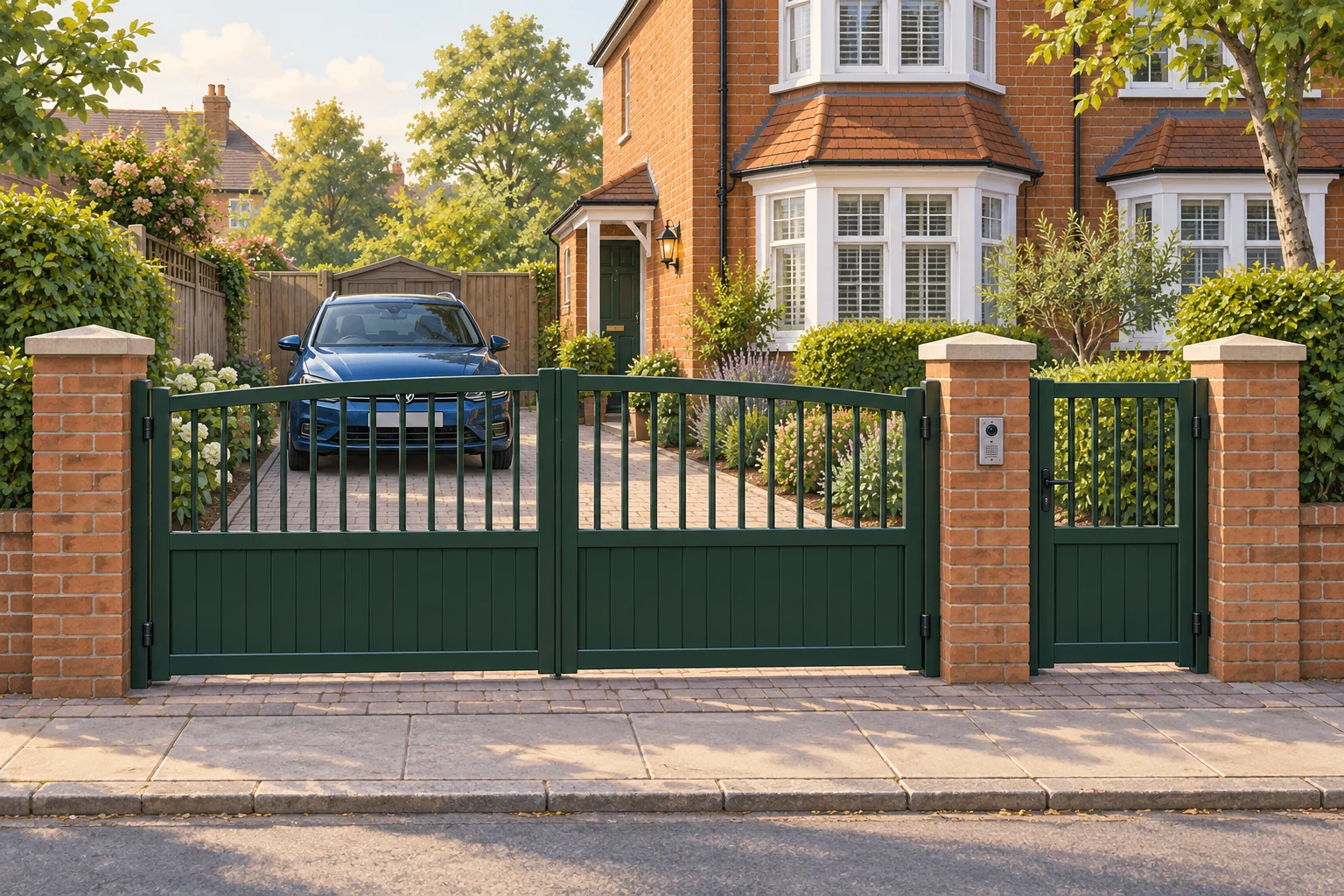
In this guide14 sections
Start with an entrance security checklist
Walk from the pavement to your front door, then along any side passage. Do this in daylight and again after dark without operating faulty equipment. Note which gates close and latch, where you cannot see a caller, and whether bins or parked cars block the controls. Include the garage, shed and route into the back garden.
Write down the problem you want to solve. Keeping strangers off the driveway, reducing the risk of car theft and answering a delivery caller are different requirements. A camera purchase may help with one without addressing the others. Ask everyone who uses the entrance where the current arrangement causes difficulty, including anyone using a wheelchair or pushchair.
| Check | Record before buying equipment |
|---|---|
| Boundary | Gate condition, adjoining fences, side access and who owns or uses each route. |
| Vehicle | Where you park, room to manoeuvre and how you store both sets of keys. |
| Visitors | Where a caller waits, how you identify them and how you let them leave. |
| Daily use | Bin collections, deliveries, school runs, care visits and access after dark. |
| Failures | What happens if power, broadband, a phone or the gate itself stops working. |
Protect the car as well as the driveway
A closed entrance does not remove the need to lock your vehicle. Check it has locked before walking away, keep keys out of sight and away from the front door, and include spare keys in your routine. Police.uk recommends additional physical vehicle protection and explains the limitations of relying on electronic locking in its vehicle-theft prevention advice.
For a keyless-entry car, consider a signal-blocking pouch for each key and check that it still works. Ask the vehicle manufacturer about disabling unused keyless functions and suitable additional protection. A Faraday pouch addresses a particular signal risk; it does not secure the car against every method of theft. Keep any product instructions with the vehicle records.
When planning how to reduce keyless car theft risk, include the house where you store the keys. Make keeping your car safe on the driveway part of the household’s closing-up routine. Check whether you can close the entrance with the car in its normal space, without obstructing a footway or leaving someone to squeeze past a moving gate.
Gates or bollards for car security?
A gate defines a broader entrance boundary. A bollard occupies a smaller part of the vehicle route and leaves pedestrian access around it. Their suitability depends on the opening, foundations, vehicle path and how you will operate them each day. Neither a substantial appearance nor an electric motor establishes a tested security rating.
When comparing gates and bollards for car security, ask what the specified product has been tested for, which installation details the rating requires and what it does not cover. Request the proposed groundworks, drainage, power arrangements and maintenance access. Include the work needed to reinstate the driveway in each quotation.
Test the layout on a drawing with your actual car dimensions. Can a driver reach the control without standing in a traffic route? Can residents still walk through with shopping? If operating a manual barrier would be difficult, discuss that before ordering. Ask the installer to explain safe failure and release arrangements rather than choosing solely by appearance.
Small driveways and unwanted parking
For a short London frontage, mark the parked vehicle, opening space, pedestrian route and pavement on the same plan. Swing leaves need room through their movement; sliding and folding designs have their own support and clearance requirements. Start with our comparison of bi-fold and sliding gates for short driveways, then consider telescopic gate layouts where side space is limited.
For unwanted parking, distinguish a vehicle on your land from one blocking the crossing outside it. Before deciding how to stop people parking on your driveway, establish the boundary and any shared access rights. A suitable closed gate may control future entry, but it does not resolve a dispute about land or authorise you to trap another vehicle.
For an existing obstruction, ask the relevant council or police service which reporting route applies. Get advice before taking action to immobilise or move a vehicle. If a gate project also changes the vehicle crossing, check dropped-kerb requirements separately.
Secure side gates and choose usable locks
Assess the whole side entrance: leaf, hinges, posts, latch and adjoining boundary. A new lock cannot compensate for a gate that no longer aligns with its frame. To make a side gate more secure, start by identifying damaged or loose components and asking which can be repaired. Describe how residents, gardeners and other authorised visitors use the passage.
Gate locks that open from both sides need careful selection. Discuss the gate thickness, available frame space, exposure to rain and whether users need a key to leave. Explain any escape-route requirements and who must be able to operate the lock. Avoid selecting a mechanism by its photograph without checking that it suits the gate and the people using it.
A separate pedestrian gate can reduce dependence on opening the vehicle entrance for every visit. Compare pedestrian and side gate options with the width, threshold and locking arrangement you need. Ask the installer to demonstrate closing, latching and authorised entry from each side at handover.
Do gates deter burglars, and should they be solid?
Consider what a closed gate changes at your particular entrance: access to the driveway, the route to the house and the visibility of someone approaching. Whether driveway gates deter burglars depends on more than the gate itself. Adjoining boundaries, household habits and the condition of doors and windows still matter. We do not assign a burglary-reduction percentage to installing a gate.
Solid panels provide screening, while open designs allow more views through the frontage. Privacy and security do not always point towards the same design. The Metropolitan Police’s home-security guidance explains why hiding places and restricted visibility deserve attention. Discuss sightlines from the house and street alongside your privacy needs.
For a powered gate, tell the designer if you want to change open bars to solid infill. The change can affect wind loading and the way the system needs assessment. Choose the construction and operation together rather than treating infill as a cosmetic addition after installation.
Use cameras and lighting with physical security
Cameras can help you observe an entrance and record events, but they do not replace secure doors, windows and gates. Deciding whether CCTV is enough for your driveway starts with the task: recognising a caller, checking a delivery or recording a parked vehicle. Ask to see sample footage from the proposed positions in daylight and darkness, with your car in place.
Aim lighting at the walking route, controls and places where you need to see a visitor. Check for glare towards drivers, neighbouring windows and the camera itself. Request a night-time adjustment after installation. Compare running costs, controls and maintenance access, not just the brightness stated on the packaging.
Position cameras to minimise recording beyond your boundary. The ICO’s home CCTV guidance explains that recording public, neighbouring or communal areas brings data-protection obligations. Discuss coverage, signage, access to recordings and deletion arrangements with the installer. Check the current guidance when specifying the system.
Let couriers through without leaving access unmanaged
Choose where a courier should wait and where a parcel can be left. A collection point outside the controlled area may suit some entrances; others need an intercom call and supervised access. Give visitors instructions that match the actual entrance and avoid sharing a permanent household access code in delivery notes.
If the system supports temporary credentials, check how they expire and who can issue them. Work through a delivery while you are out, a failed call and a driver who cannot find the pedestrian gate. Read our guide to parcel and delivery access for the options to discuss.
For identifying callers, compare gate intercom arrangements by voice, video, indoor answering and ongoing costs. Make sure the household knows who is authorised to release the gate and how to confirm an unexpected caller before opening it.
Plan for internet outages, power cuts and lost phones
Ask the installer to separate three questions: what works without broadband, what works without mobile coverage and what works without mains power. The answers depend on the installed controller, entry equipment and configuration. An app failure does not establish that the motor has failed, and a working internet connection does not guarantee that every access function works.
Use the equipment list to check smart-gate compatibility and outage arrangements. Agree a documented alternative for authorised residents. Follow the exact manufacturer instructions for any manual release; our manual gate-opening guide explains what to establish before a power cut.
Keep account ownership with the responsible household or managing organisation. Set a strong, unique password, install supported updates and remove access that former users no longer need. The NCSC’s smart-device guidance covers setup and ongoing security. Ask how long the supplier supports the product and what happens when that support ends.
Protect the house and prepare before a holiday
To protect your London home from burglary, include the building itself in the plan. Close and lock doors and windows when leaving, secure the side gate and outbuildings, keep valuables out of view and use your alarm as instructed. Agree who checks each part so that locking up does not depend on one person remembering everything.
For home security before a holiday, arrange a trusted contact, deal with regular deliveries and check lighting timers. Avoid publicly advertising that the house is empty. Give the person looking after the property a working access method and clear instructions for a fault, including who can arrange help.
Test the agreed access arrangement before leaving, without defeating any protective device. Keep operating instructions and contractor details somewhere your authorised contact can find them. Consider the effect of a lost phone or a failed call while you are travelling, and avoid making an unfamiliar visitor depend on a complicated release procedure.
After a break-in, make a staged repair plan
If someone may still be inside or there is immediate danger, keep away and call the police on 999. Once the situation is safe, follow police guidance on preserving evidence before repairs. Contact your insurer about the information and approval they need. Keep photographs and records where it is safe and appropriate to do so.
When securing your home after a break-in, distinguish urgent temporary work from the longer-term project. Ask the repairer to identify damaged locks, supports, gate components or entry controls and explain what can remain in use. Do not operate a gate that appears unstable or has damaged protective equipment.
Review missing keys, remotes and compromised accounts with the relevant suppliers. Request a record of the credentials removed or replaced. Before commissioning a larger upgrade, review the actual incident and the entrance layout with a competent professional rather than buying several unrelated products in haste.
Prioritise the budget and check insurance terms
For home security on a budget, start with a written list of defects and access problems. Separate repairs that restore an existing function from improvements that add a new one. Ask for an itemised scope so you can compare repairing a latch, upgrading visitor controls and replacing a gate without confusing their purposes.
Allow for subscriptions, servicing, replacement credentials and any driveway reinstatement. Ask who pays when several households share the entrance. Keep a record of excluded electrical work, groundworks or changes to existing pillars before treating two prices as equivalent.
Tell your insurer about the proposed arrangement and check the actual policy conditions. Do not budget on an assumed premium reduction or assume a gate guarantees cover. Our article on driveway gates and home insurance explains the questions to put to the insurer. Keep their response with the installation and maintenance records.
Keep safe access in the security specification
A security improvement still needs to work safely for children, visitors and anyone passing the entrance. Ask the designer to assess moving leaves, hinges, trapping points, vehicle waiting space and pedestrian routes. Do not disable a sensor or increase force to make a gate close despite a fault. HSE’s powered-gate safety guidance explains why each installation needs consideration as a complete system.
Provide a measured plan, photographs from both sides and a description of a normal busy day. Include the house entrance, car parking, side passage, bins and any shared land. Identify permissions or boundary questions that need resolution before manufacture. Ask the installer to explain the maintenance and handover arrangements for the proposal.
For an existing entrance, start with gate repair and maintenance if unreliable movement is the main issue. For a new entrance, compare automated gate systems against your access brief. Keep the agreed drawing, controls, protective measures, exclusions and ongoing costs together so the finished project matches the quotation.